

If you live with diabetes, you know how challenging it can be to keep your blood sugar levels steady throughout the day. Food plays a major role in that process, especially the amount and type of carbohydrates you eat. That is where the CCHO diet comes in. What Is the CCHO Diet? The name might sound clinical, but the idea behind it is simple. It focuses on eating a consistent amount of carbohydrates at each meal.
Healthcare professionals often recommend the CCHO diet because it helps people avoid sharp blood sugar spikes and dips. For many individuals with diabetes, especially those using insulin, this eating style brings a sense of structure and predictability to daily meals. The goal is not to eliminate carbs, but to manage them steadily and reliably.
What Does CCHO Stand For?
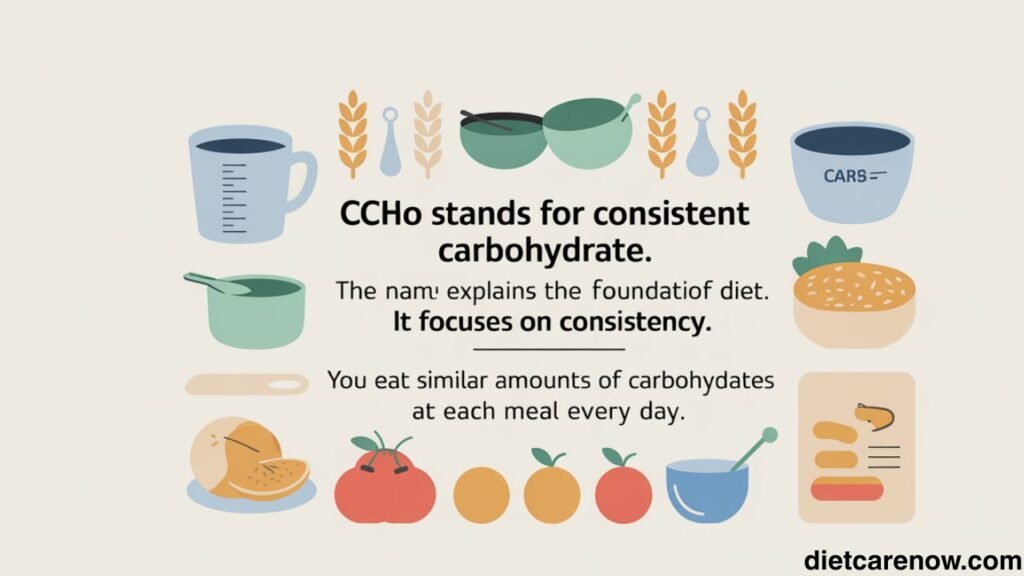
CCHO stands for Consistent Carbohydrate. The name explains the foundation of the diet. It focuses on consistency. You eat similar amounts of carbohydrates at each meal every day.
Carbohydrates have the biggest impact on blood glucose compared to proteins and fats. When your carb intake changes drastically from one meal to the next, your blood sugar often follows the same pattern. By keeping your carb amounts steady, your body gets a predictable level of glucose at regular intervals.
This consistency is important for anyone who wants stable blood sugar levels, but it is especially crucial for people taking insulin. Your medication works best when your meals follow a pattern. The CCHO diet supports that pattern by making your carbohydrate intake easier to manage.
Also read: /skinless-chicken-leg-calories/
Why the CCHO Diet Was Created
The CCHO diet was created to meet the medical needs of people living with diabetes. Blood sugar management depends on the balance between food, physical activity, and medication. Since carbohydrates directly influence blood glucose, a structured approach makes it easier to match insulin doses to food intake.
For individuals on insulin therapy, the CCHO diet offers several benefits. It reduces the risk of sudden highs or lows. It also makes insulin dosing more predictable. Healthcare providers often recommend this eating plan during diabetes education sessions because it teaches people how to build balanced meals without feeling deprived.
The diet was never intended to be a fad. It was developed as a practical tool with a clear medical purpose. Its main goal is to support safe and effective diabetes management.
How the CCHO Diet Works
The CCHO diet focuses on three things: daily carbohydrate targets, balanced carb distribution, and consistent meal timing.
Daily carbohydrate targets
Most plans set a total number of carbs per day. The exact amount depends on your age, activity level, medications, and health goals. Common plans range from 135 to 180 grams of carbs per day, but this varies by individual.
Balancing carbs across meals
Instead of eating most of your carbs at one meal, you spread them evenly. For example, you may aim for 45 to 60 grams of carbs at breakfast, lunch, and dinner.
Meal timing and portion control
Eating at regular times prevents large gaps that could cause blood sugar drops. You also learn to manage portion sizes so that your carb intake stays steady.
It is a structured but flexible approach. You can still enjoy your favorite foods. You just fit them into your carbohydrate plan.
Carbohydrate Counting Basics
The CCHO diet depends on basic carb-counting skills. You need to know how many grams of carbs are in the foods you eat.
Understanding grams of carbohydrates
Food labels list total carbohydrates per serving. This number includes starches, sugars, and fiber.
Net carbs vs total carbs
However, most diabetes education programs focus on total carbs because it provide a more reliable measure for blood sugar impact.
Tools for tracking carb intake
Carb counting becomes easier with:
- Food labels
- Carb counting apps
- Measuring cups
- Digital kitchen scales
- Diabetes meal planning books
Once you get used to it, carb counting becomes second nature.
Foods Allowed on a CCHO Diet
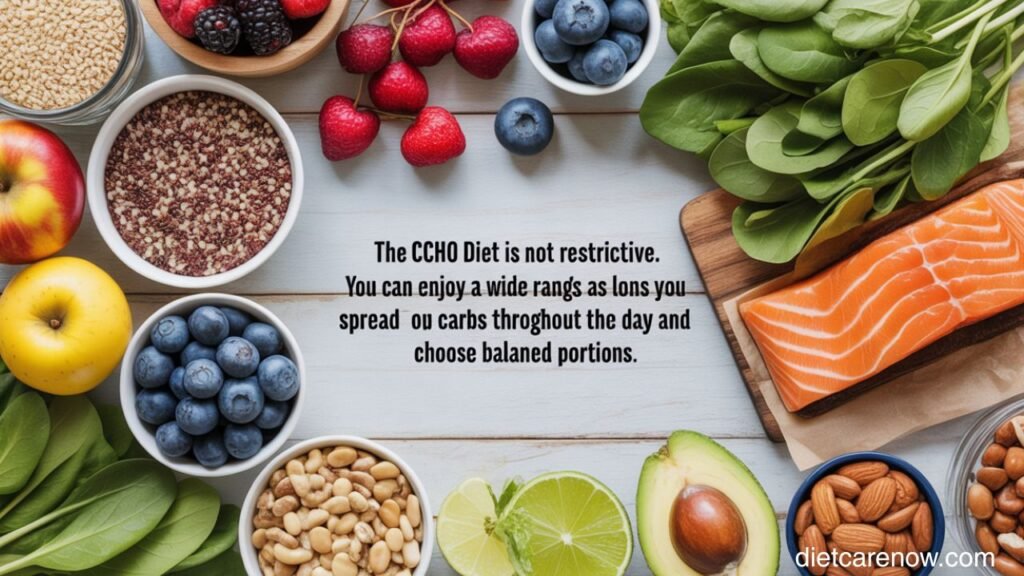
The CCHO diet is not restrictive. You can enjoy a wide range of foods as long as you spread your carbs throughout the day and choose balanced portions.
Healthy carbohydrate sources
- Whole grains such as quinoa, brown rice, oats, and whole wheat bread
- Fruits like apples, berries, oranges, and pears
- Legumes, including lentils, black beans, chickpeas
- Starchy vegetables like sweet potatoes and peas
These options contain fiber and nutrients that support stable blood sugar.
Lean proteins
- Skinless chicken
- Fish
- Eggs
- Tofu
- Lean cuts of beef or lamb
- Greek yogurt
Healthy fats
- Olive oil
- Nuts and seeds
- Avocado
- Nut butters
Fats slow digestion and help prevent rapid blood sugar spikes.
Vegetables and low-carb options
- Leafy greens
- Broccoli
- Cauliflower
- Zucchini
- Mushrooms
- Tomatoes
Non-starchy vegetables contain very few carbs and add volume to meals.
Foods to Limit or Avoid
Some foods lead to rapid blood sugar spikes or add unnecessary calories.
High-sugar foods
- Candy
- Pastries
- Ice cream
- Cookies
These foods cause quick rises in blood glucose.
Processed carbohydrates
- White bread
- Packaged snacks
- Instant noodles
- Crackers made with refined flour
These break down quickly and may cause a fast sugar rise.
Sugary beverages
- Regular soda
- Fruit juices
- Sweetened tea
- Energy drinks
Liquid sugar causes the fastest spikes.
Refined grains
- White rice
- White pasta
These contain less fiber and may lead to higher glucose levels.
Sample Daily Meal Plan for the CCHO Diet
Here is an example of a simple, balanced day.
Breakfast (45 grams of carbs)
- 1 slice whole wheat toast (15 g)
- 1 small banana (23 g)
- 1 boiled egg (0 g)
- Coffee with a splash of milk (7 g)
Lunch (45 grams of carbs)
- Grilled chicken salad with mixed greens
- 1 small whole grain roll (20 g)
- 1 apple (25 g)
Dinner (45 grams of carbs)
- Baked salmon
- 1 cup quinoa (39 g)
- Steamed broccoli (6 g)
Snacks (15 to 20 grams of carbs)
- 1 small orange
- A handful of almonds
- Low-fat yogurt
This plan provides consistency across the day and supports stable blood sugar.
Portion Control and Carb Distribution
Portion control is a major part of the CCHO diet. Most people do well with:
- 45 to 60 grams of carbs per meal
- 15 to 20 grams of carbs per snack, if snacks are part of the plan
The plate method is a simple visual tool. Fill half your plate with non-starchy vegetables, one quarter with lean protein, and one quarter with whole grains or starchy foods.
You can use measuring cups or a food scale for accuracy. Over time, you will learn what portions look like without tools.
Benefits of Following a CCHO Diet
The CCHO diet offers several well-documented benefits, especially for people with diabetes.
Better blood sugar control
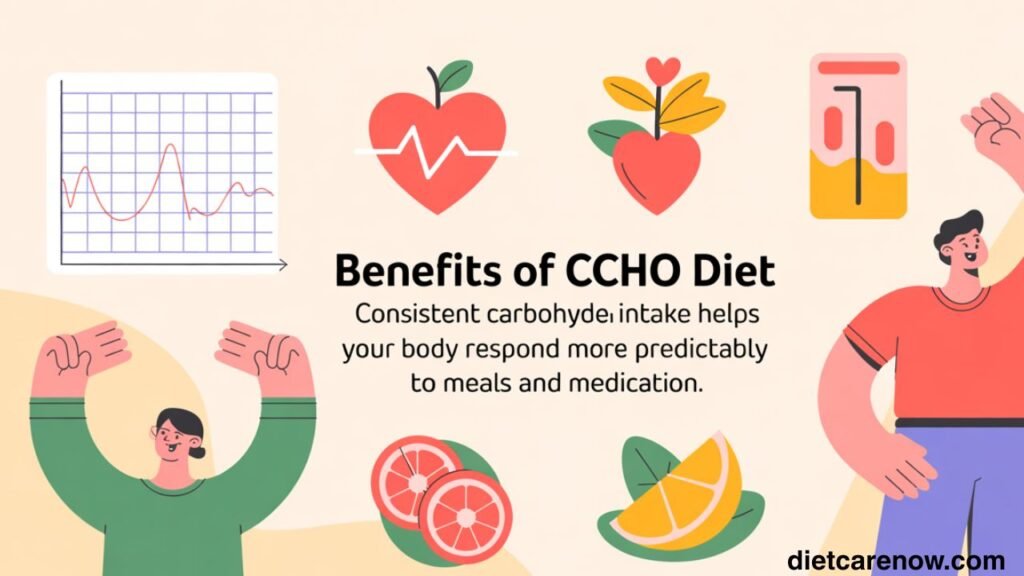
Consistent carbohydrate intake helps your body respond more predictably to meals and medication.
Reduced blood sugar spikes
By avoiding large carb loads, you prevent sudden jumps in glucose.
Supports weight management
Even distribution of carbs can help reduce overeating and cravings.
Prevents long-term complications
Stable blood sugar levels lower the risk of nerve damage, kidney issues, and heart disease.
Potential Challenges of the CCHO Diet
Like any structured eating plan, the CCHO diet comes with some challenges.
Carb counting can feel overwhelming
Learning the numbers takes time, but it gets easier with practice.
Eating out can be tricky
Restaurant meals often have unknown carb amounts. Asking questions or choosing simpler dishes can help.
Cravings and portion control
Balanced meals with protein and fiber help reduce cravings.
With planning and support, most people adapt well to the routine.
Who Should Follow the CCHO Diet?
The CCHO diet is designed for people who need predictable blood sugar control.
It works well for:
- People with type 1 diabetes
- People with type 2 diabetes
- Those using insulin therapy
- Adults who prefer a structured meal plan
- People trying to avoid sudden blood sugar swings
Many healthcare teams use this approach during diabetes education because it is practical and easy to customize.
CCHO Diet vs Low-Carb Diets
These two diets often get confused, but they have different goals.
Key differences
- CCHO aims for consistent carb intake.
- Low-carb aims to reduce carbs significantly.
The CCHO diet does not remove carbohydrates. It organizes them. Low-carb diets limit carbs to trigger weight loss or reduce insulin needs.
Carb flexibility
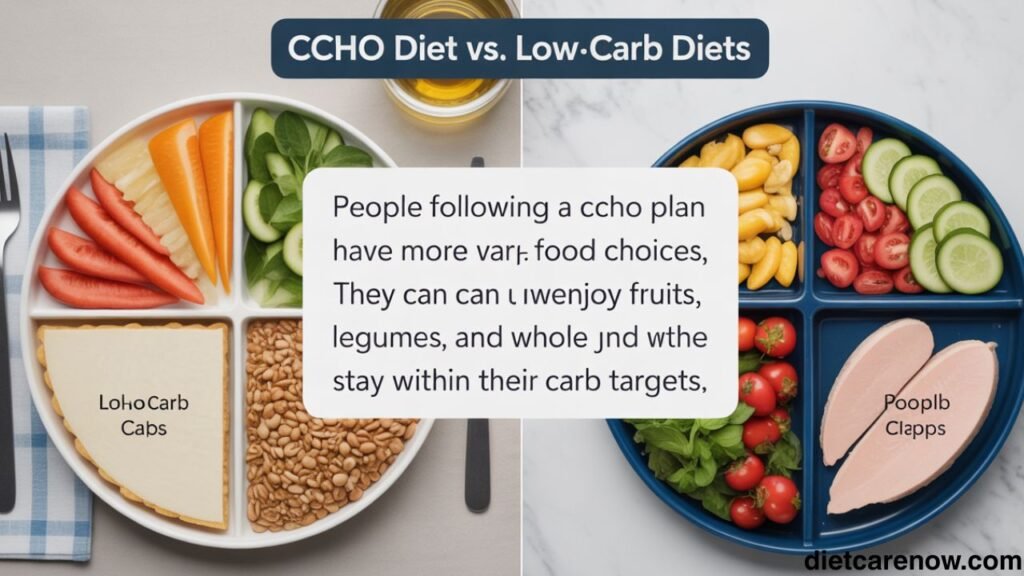
People following a CCHO plan have more variety in food choices. They can enjoy fruits, legumes, and whole grains as long as they stay within their carb targets.
Which approach is better?
It depends on your health needs.
CCHO is often recommended for those managing diabetes with insulin.
Low-carb may work better for people focusing on weight loss or reducing insulin resistance.
Always discuss changes with your healthcare provider.
Tips for Success on the CCHO Diet
You can make the CCHO diet easier with simple habits.
Meal prepping
Preparing meals in advance helps you stay within your carb limits.
Reading food labels
Check serving sizes and total carbohydrates. Labels can be misleading if portions are unclear.
Using apps for carb tracking
Tools like MyFitnessPal, Cronometer, or diabetes-specific apps help you track numbers quickly.
Working with a dietitian
A registered dietitian can help create a plan that fits your lifestyle, medications, and personal preferences.
These tips can turn the CCHO diet into a sustainable routine rather than a strict set of rules.
Conclusion: Is the CCHO Diet Right for You?
The CCHO diet is a practical and reliable way to manage blood sugar levels. It brings structure to daily meals and removes the guesswork from carbohydrate choices. Many people with diabetes find comfort in knowing their meals follow a pattern that supports stable glucose levels.
This eating style is not about perfection. It is about building consistency. With practice, carb counting becomes easier and meal planning feels more natural.
If you think the CCHO diet could be right for you, discuss it with your healthcare provider or a registered dietitian. They can help you set personalized carb goals and teach you how to apply them in your daily routine.