
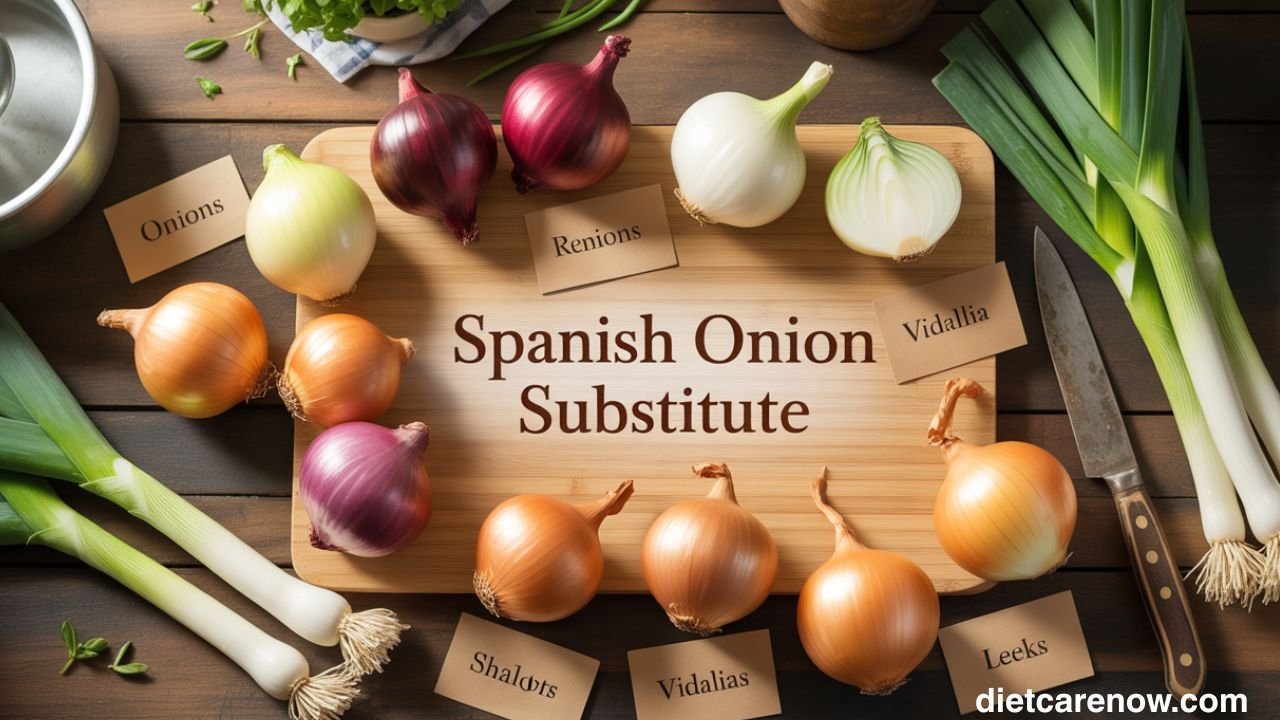
Spanish onions are a kitchen staple in many parts of the world, but there are plenty of moments when you reach for one and realize you’re out. Maybe your grocery store didn’t have any. Spanish onion substitute Perhaps you prefer a different flavor. Or perhaps you’re cooking for someone sensitive to strong onion varieties. Whatever the reason, it helps to know what to use instead.
Before choosing a substitute, it’s good to understand what makes Spanish onions special and how they behave in different dishes. Once you know that, picking the right replacement becomes much easier, and your recipe will stay balanced and flavorful.
So let’s start with what defines a Spanish onion and why choosing the correct substitute matters.
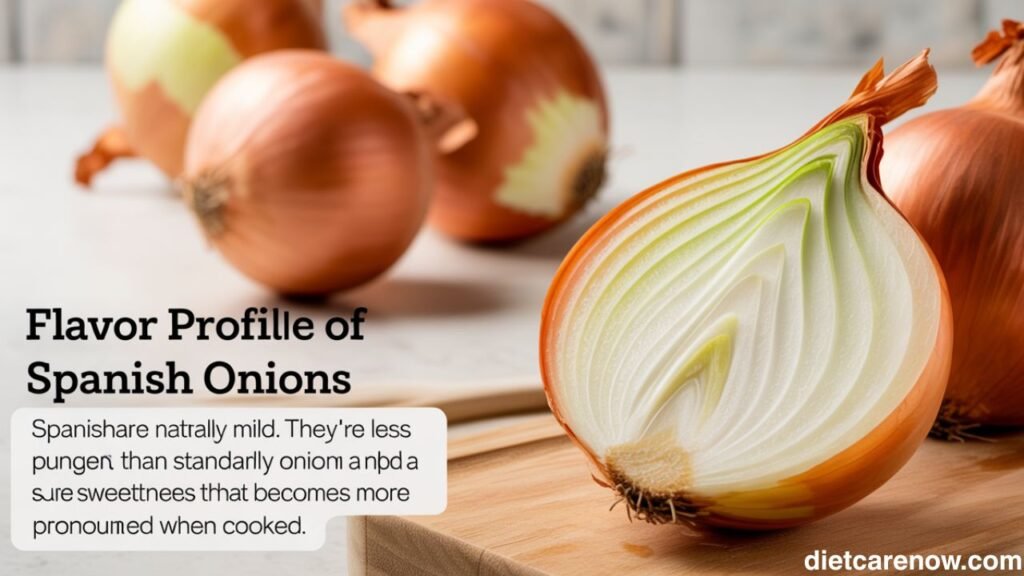
Flavor Profile of Spanish Onions
Spanish onions belong to the yellow onion family, but they stand apart because of a few key characteristics.
Mild Sweetness
Spanish onions are naturally mild. They’re less pungent than standard yellow onions and have a subtle sweetness that becomes more pronounced when cooked.
Juiciness
These onions hold a good amount of moisture. When you slice into one, you’ll notice it’s not dry or fibrous. This makes them ideal for caramelizing, grilling, or roasting.
Best Cooking Uses
Spanish onions are versatile, and they shine in dishes where the onion flavor should stand out without taking over.
Great uses include:
- Caramelizing
- Grilling
- Fajitas
- Salads, when thinly sliced
- Soups and stews
- Mild salsas
Since they’re not overpowering, they work well in recipes that call for balance.
Also read: /minestrone-soup-nutrition/
What Makes a Good Substitute?
Not every onion variety works well in place of a Spanish onion. A good substitute should align with a few qualities.
Matching Flavor Intensity
You want an onion that won’t overpower the dish. A variety that’s too sharp or too strong can throw off the entire flavor.
Texture Similarities
Spanish onions are crisp but juicy. A good substitute should offer a similar bite and moisture level, especially for raw dishes or grilling.
Cooking Behavior and Heat Tolerance
Some onions burn quickly. Others become mushy. A reliable substitute should hold up under the same conditions, whether you’re sautéing, roasting, or slow cooking.
Yellow Onions as the Best All-Purpose Substitute
If you want the simplest and most reliable swap, yellow onions are the clear winner. They’re the closest match in both flavor and structure.
Flavor Comparison
Yellow onions can be slightly stronger and more pungent when raw. But once cooked, their flavor becomes mellow and sweet, much like Spanish onions.
Ideal Cooking Uses
Yellow onions work well in:
- Soups
- Stews
- Stir-fries
- Roasted dishes
- Caramelized onions
They’re not the best substitute if you plan to use them raw. They can taste sharper and may overpower salads or cold dips. In those cases, red onions, white onions, or sweet onions might be better.
White Onions for a Sharper, Brighter Flavor
Wing.
How White Onions Differ
White onions are:
- Sharper in flavor
- Less sweet
- Crunchier than Spanish onions
They bring brightness, which works well in fresh dishes but may require careful handling in cooked recipes.
Best Dishes for Substitution
Use white onions if your dish needs a little punch:
- Salsas
- Pico de gallo
- Sandwich toppings
- Dips
- Rice bowls
Adjusting Quantity for Balance
Because they’re stronger, start with ¾ cup of white onion for every 1 cup of Spanish onion the recipe calls for. Taste and adjust as needed.
Red Onions for Raw Dishes and Colorful Presentations
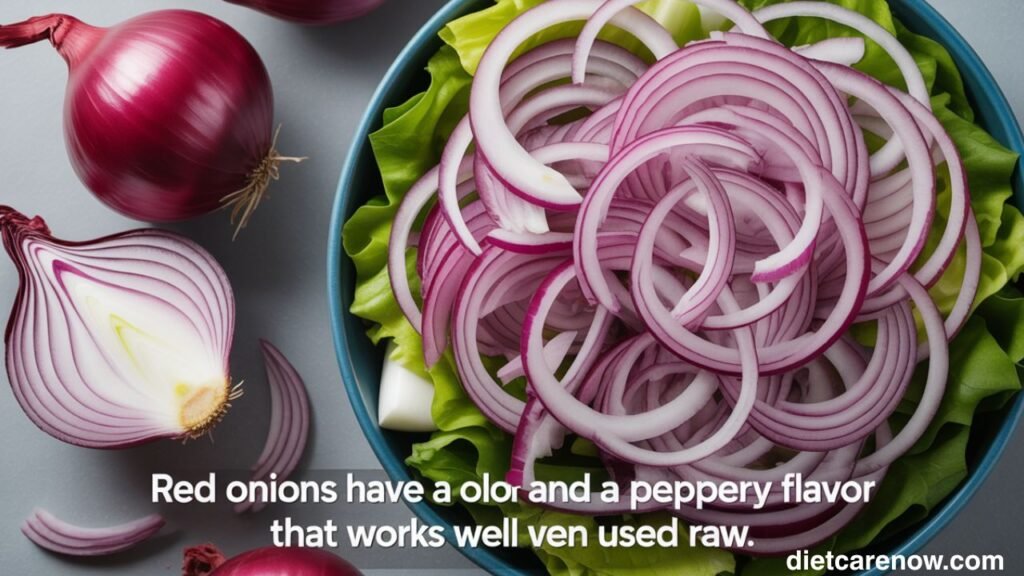
Red onions have a distinct color and a peppery flavor that works well when used raw.
Flavor Notes
Red onions are:
- Mild to moderately sharp
- Less sweet
- Perfect for fresh and uncooked dishes
When Red Onions Work Best
Use them when color matters or when the onion won’t be heavily cooked. They work well in:
- Salads
- Burgers
- Wraps
- Salsas
- Pickled onion recipes
Using Them in Cooked Dishes
Red onions turn a dull grayish color when cooked, which can affect presentation. They still taste good, but they’re best for raw dishes unless color doesn’t matter.
Sweet Onions like Vidalia or Walla Walla
Sweet onions are a popular choice because they’re mild, juicy, and naturally sweet.
Sweetness Level Comparison
Sweet onions are sweeter than Spanish onions. Vidalia, Walla Walla, and Maui onions all fit this category.
Perfect for Caramelizing and Grilling
Their high sugar content helps them caramelize beautifully. They develop deep golden color and rich flavor more quickly than most varieties.
How to Adjust Cooking Time
Sweet onions cook faster because they contain more sugar. Keep the heat a little lower and watch closely to prevent burning. Use slightly less onion than the recipe calls for to avoid overpowering sweetness.
Shallots: A More Refined and Mild Alternative
Shallots bring a delicate, slightly sweet, and lightly garlicky flavor. They won’t taste exactly like Spanish onions, but they’re perfect for dishes that require subtle onion notes.
Flavor Complexity
Shallots offer:
- Mild sweetness
- A touch of garlic-like flavor
- Softer texture
Best Used In
Shallots excel in:
- Salad dressings
- Pan sauces
- Vinaigrettes
- Delicate seafood dishes
- Creamy pasta sauces
Conversion Ratio
Shallots are smaller, so use two to three shallots to replace one medium Spanish onion.
Green Onions (Scallions) for Fresh, Mild Onion Flavor
Green onions offer a light onion flavor without being overpowering.
Best Uses
Use scallions for dishes that need freshness:
- Garnishes
- Stir-fries
- Soups
- Rice bowls
- Egg dishes
Not Ideal for Heavy Cooking
Green onions lose their flavor quickly when exposed to long cooking times. They also don’t provide the bulk or sweetness that a Spanish onion would in something like a stew or casserole.
Leeks as a Mild and Sweet Substitute
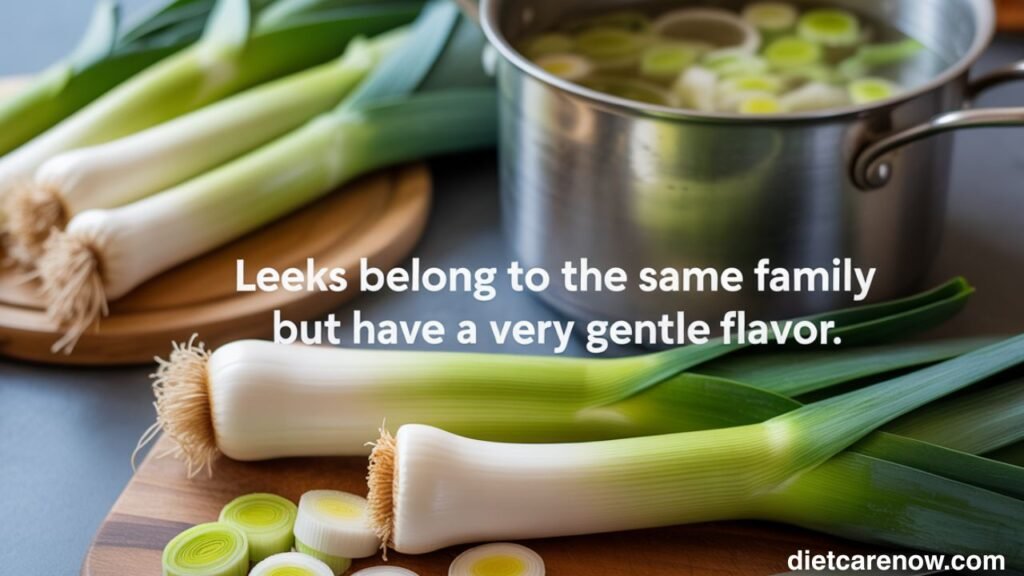
Leeks belong to the same family but have a very gentle flavor.
Their Unique Taste and Structure
Leeks offer:
- Soft sweetness
- A tender texture when cooked
- A mild onion flavor that doesn’t dominate
How to Prepare Leeks Properly
Leeks often hold dirt between their layers. Slice them lengthwise, separate the layers, and rinse well.
Best Recipes for Swapping
Leeks are great in:
- Soups
- Creamy dishes
- Potato recipes
- Risotto
- Slow-cooked meals
They won’t work well for raw dishes or grilling.
Using Garlic + Mild Onion Combo
Sometimes, combining a mild onion with a bit of garlic can mimic the depth of flavor Spanish onions bring.
Enhancing Flavor Depth
Garlic adds warmth and complexity. When paired with a mild onion like a yellow or sweet variety, it rounds out the flavor.
Ratio Suggestions
Try:
- 1 cup mild onion + ½ to 1 clove garlic
Garlic burns easily, so add it halfway through cooking.
Works Best In
This combo suits:
- Pasta sauces
- Slow-cooked stews
- Meat dishes
- Savory rice recipes
Onion Powder or Granulated Onion for Convenience
If you’re out of fresh onions entirely, dry onion products can help.
How to Replace Fresh Onions with Dry Forms
Use this conversion as a guide:
- 1 tablespoon onion powder = 1 medium onion
- 2 tablespoons granulated onion = 1 medium onion
Conversion Chart
| Fresh Onion | Onion Powder | Granulated Onion |
|---|---|---|
| 1 medium | 1 tbsp | 2 tbsp |
| ½ onion | ½ tbsp | 1 tbsp |
| 1 cup chopped | 2 tbsp | 4 tbsp |
Flavor Limitations
Dry onions provide flavor but not texture. Avoid using them in dishes where onions contribute structure, like fajitas or stir-fries.
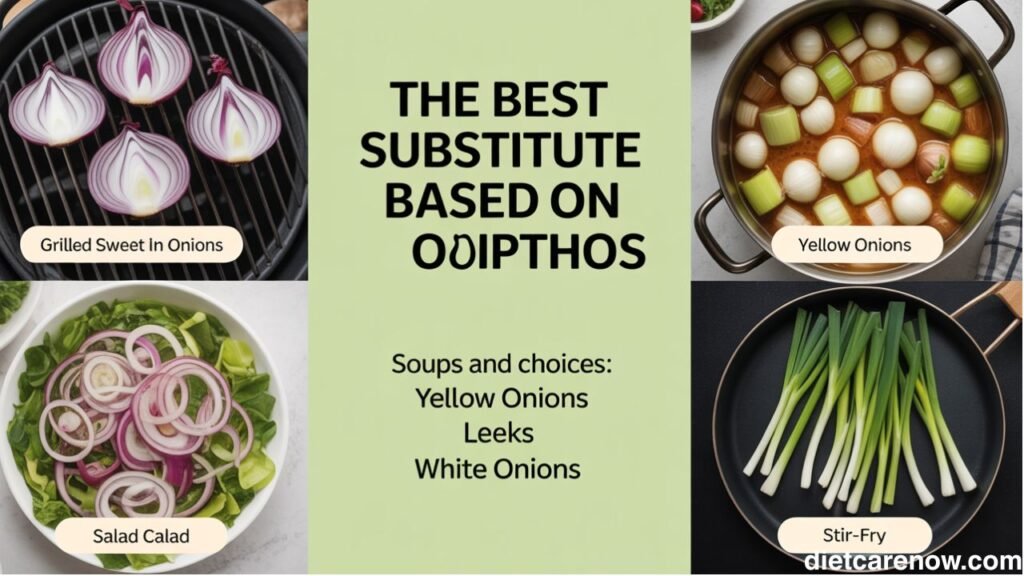
The Best Substitute Based on Cooking Method
Choosing the right substitute depends on how you plan to use it.
Raw Dishes
Best choices:
- Red onions
- Sweet onions
- Shallots
Grilling
Best choices:
- Sweet onions
- Yellow onions
Roasting
Best choices:
- Yellow onions
- Sweet onions
- Leeks (for softer dishes)
Soups and Stews
Best choices:
- Yellow onions
- Leeks
- White onions
Stir-Fries
Best choices:
- Yellow onions
- White onions
- Scallions (added late)
Substitutes to Avoid for Spanish Onions
Not every onion variety works well. A few can throw off the balance.
Too Spicy or Too Pungent Onions
Avoid:
- Raw white onions in mild dishes
- Overly sharp red onions in cooked recipes
They can dominate the flavor and change the character of the dish.
Overly Sweet Varieties
Some sweet onions may be too sugary, especially in savory dishes. Adjust quantity if using sweet onions to avoid imbalance.
Why Balance Matters
Spanish onions are known for their mildness. A substitute that’s too strong or too sweet will shift the entire flavor profile.
Conclusion: Choosing the Right Substitute for Your Recipe
Choosing the right substitute for a Spanish onion isn’t as simple as picking whatever onion you have. Think about flavor, texture, and how the onion behaves in your recipe.
Summary of Top Options
- Yellow onions: Best all-purpose substitute
- White onions: Sharper option for fresh dishes
- Red onions: Great for raw dishes and color
- Sweet onions: Perfect for caramelizing and grilling
- Shallots: Ideal for delicate dishes
- Green onions: Best for fresh, mild flavor
- Leeks: Mild and sweet for soups and creamy recipes
- Onion powder: Convenience-based replacement
Quick Selection Guide
- Want mild flavor? Sweet onions or leeks
- Cooking something savory and hearty? Yellow onions
- Need a raw onion for salads? Red onions or shallots
- Want sweetness? Vidalia or Walla Walla
Final Tips for Flavor Success
- Always adjust the quantity based on the onion’s strength.
- Taste as you go to maintain balance.
- Consider texture and cooking time, not just flavor.
With the right substitute, your dish will still taste balanced, flavorful, and satisfying. And next time you run out of Spanish onions, you’ll know exactly what to reach for.