
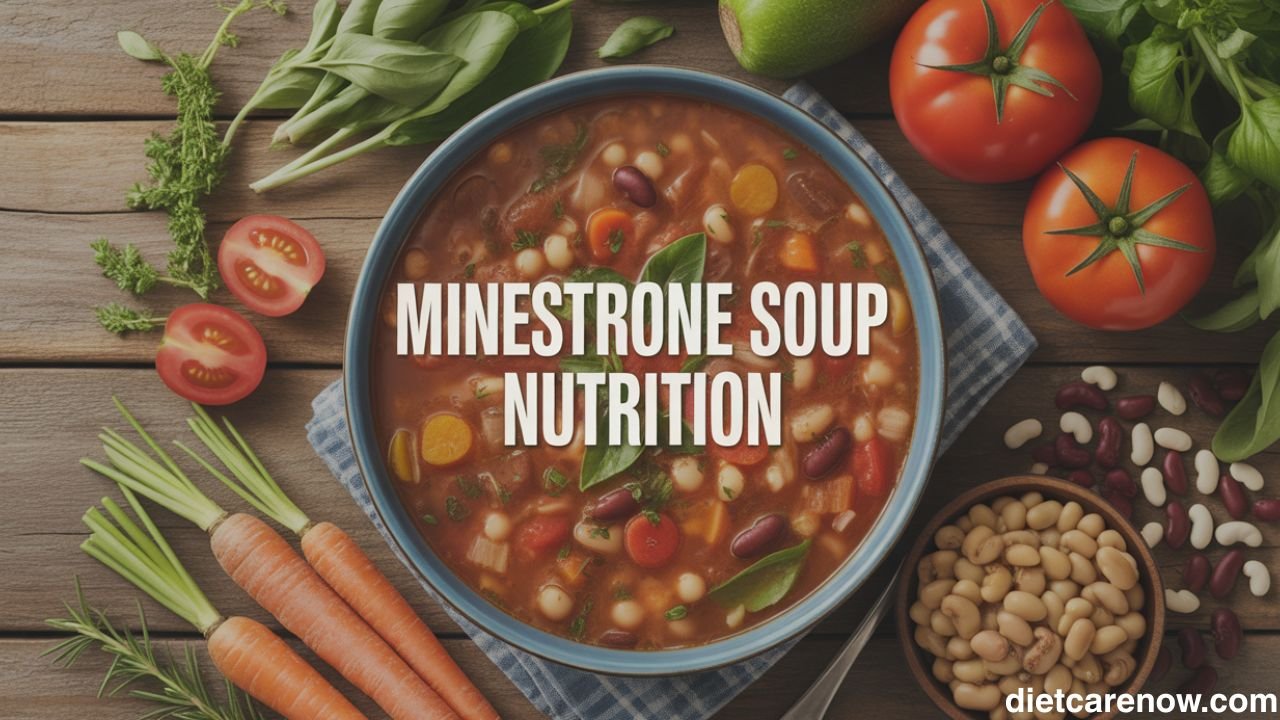
Minestrone is one of the most iconic dishes to come from Italian home cooking. It is warm, filling, colorful, and full of the everyday ingredients people already keep in their kitchens. At its core, it is a simple vegetable soup, but the flavors and textures make it feel more special than that. Minestrone Soup Nutrition The name itself comes from the Italian word “minestra,” which refers to a hearty soup served as a first course. Over many generations, families across Italy have adapted the recipe to match the seasons, local produce, and personal taste.
Today, minestrone is known around the world as a wholesome and nourishing meal. Most versions combine vegetables, beans, herbs, and a light broth, often with a small amount of pasta or rice. Because it uses whole ingredients and relies on slow simmering rather than heavy fats or cream, it offers a clean and balanced nutritional profile that suits many lifestyles. People enjoy it for its comforting flavor, but many also appreciate it for its health benefits. From fiber to vitamins to plant-based protein, minestrone delivers a surprising amount of nutrition in every bowl.
What Makes Minestrone Soup Unique
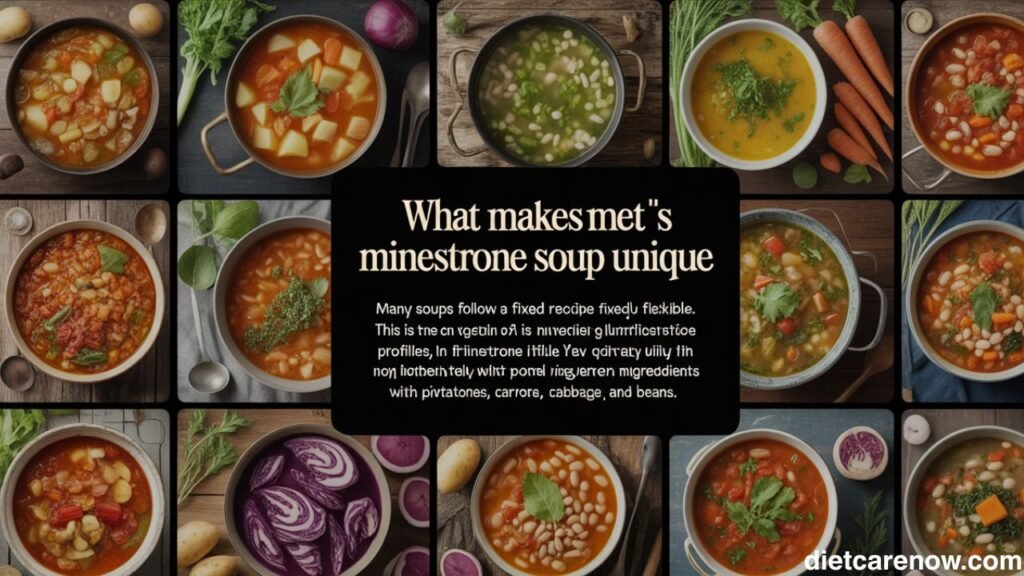
Many soups follow a fixed recipe, but minestrone is famously flexible. This is one of the reasons its nutritional profile can vary significantly. In northern Italy, cooks often prepare minestrone with ingredients like potatoes, carrots, cabbage, and beans. In coastal areas, it might include zucchini, tomatoes, and basil. Some families add a spoonful of pesto. Others prefer a clear broth with only vegetables and herbs. The variations are nearly endless.
What stays consistent is the concept. Minestrone is built around seasonal vegetables, usually combined with legumes and a starch like pasta or rice. The broth is usually light and tomato-based, but vegetable stock or chicken stock is also common. Due to its adaptability, minestrone suits various dietary preferences. It can be low-fat, vegetarian, vegan, gluten-free, or even high-protein depending on how it is prepared.
This variety makes minestrone special. The flavor changes with the seasons, and so does the nutritional mix. A winter version with root vegetables may have more complex carbohydrates. A summer batch full of green beans, zucchini, and tomatoes may offer more vitamin C and potassium. Whatever the version, the soup always provides a solid foundation of nutrient-rich ingredients.
Also read: /calories-are-in-half-a-cup-of-cottage-cheese/
Core Ingredients Used in Minestrone Soup
Although minestrone has many variations, most recipes share the same core components. Each one adds a distinct set of nutrients.
Vegetables
Common vegetables include:
- Carrots
- Celery
- Onion
- Zucchini
- Tomatoes
- Green beans
- Spinach or kale
- Potatoes
These vegetables supply antioxidants, vitamins, minerals, and dietary fiber. Their combination gives the soup depth of flavor and a wide range of nutrients.
Beans
Kidney beans, cannellini beans, or borlotti beans are often used. Beans boost the soup with plant-based protein, complex carbohydrates, and soluble fiber.
Pasta or Rice
Small pasta shapes like ditalini or macaroni are traditional. Some versions use rice instead, especially when gluten-free cooking is needed. These ingredients add energy-rich carbohydrates.
Herbs and Seasonings
Garlic, basil, rosemary, thyme, parsley, and bay leaves are commonly added. They provide flavor without extra calories and offer beneficial plant compounds.
Broth
Most recipes use vegetable broth or a light tomato broth. Chicken broth is another option. The broth determines a large portion of the soup’s sodium content.
Together, these ingredients create a balanced meal that is naturally rich in nutrients and satisfying without being heavy.
Nutritional Overview (Per Serving)
A typical homemade serving of minestrone (about 1.5 cups) provides:
- Calories: 150 to 250
- Protein: 6 to 10 grams
- Carbohydrates: 25 to 35 grams
- Fat: 2 to 5 grams
- Fiber: 4 to 8 grams
The exact values depend on the ingredients. Adding extra beans increases protein and fiber. Using whole wheat pasta boosts complex carbs. A broth low in sodium reduces salt intake. What stands out is the balance. You get carbohydrates from vegetables and pasta, protein from beans, and very little fat. This makes the soup satisfying but still light.
The fiber content is especially notable. Many people struggle to eat enough fiber each day. A bowl of minestrone can easily provide a quarter of your daily needs.
Vitamins and Minerals in Minestrone Soup
Minestrone is packed with vitamins and minerals because it includes such a wide variety of vegetables and legumes.
Here are the key nutrients you can expect:
Vitamins
- Vitamin A: Found in carrots, tomatoes, spinach, and kale. Supports healthy vision and immune function.
- Vitamin C: High in tomatoes, green beans, and zucchini. Helps with collagen production, immune protection, and iron absorption.
- Vitamin K: Present in leafy greens. Important for bone strength and blood clotting.
- B-complex vitamins: Beans and whole grains supply B vitamins that support energy metabolism and brain function.
Minerals
- Potassium: Abundant in tomatoes, potatoes, and beans. Helps regulate fluid balance, nerve function, and heart rhythm.
- Magnesium: Comes from beans and leafy greens. Supports muscle function and energy production.
- Iron: Present in beans and greens. Important for oxygen transport and healthy blood.
Because minestrone combines so many ingredients, it offers a broad range of nutrients rather than relying on a single source.
Health Benefits of Vegetable-Rich Soups
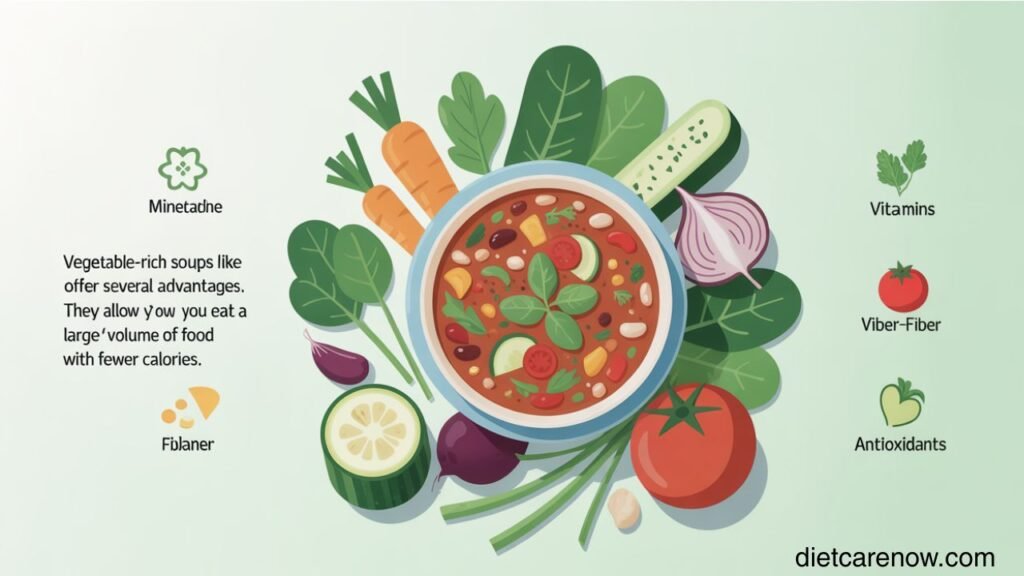
Vegetable-rich soups like minestrone offer several advantages. They allow you to eat a large volume of food with fewer calories. This helps you feel full without overeating. Vegetables are also rich in antioxidants that help protect your cells from oxidative stress.
Soups also slow down eating. The warm broth encourages mindful, slower consumption, which can support better digestion and portion control. Since vegetables contain high water content, the soup also supports hydration.
Eating a variety of vegetables regularly is linked to better weight control, stronger immunity, and improved overall health. Minestrone makes it easy to reach those goals.
Role of Beans in Boosting Nutrition
Beans are one of the star ingredients in minestrone. They add nutrients that many people do not get enough of.
Here are the main contributions of beans:
- Plant-based protein: Helps maintain muscle, supports tissue repair, and boosts satiety.
- Folate: Important for red blood cell production and overall cellular health.
- Iron, magnesium, and potassium: Essential minerals for energy and heart function.
Beans also have a low glycemic index. This means they release energy slowly and steadily, which can benefit people managing blood sugar. Because minestrone includes beans in a broth with vegetables, the dish becomes nutrient-dense without being heavy.
Fiber Content and Digestive Health
Fiber is one of the strongest nutritional highlights of minestrone. A single serving typically contains 4 to 8 grams of fiber, which supports several aspects of digestive health.
Benefits of Fiber in Minestrone Soup
- Helps regulate bowel movements
- Supports gut health by feeding beneficial bacteria
- Promotes a sense of fullness after meals
- Helps stabilize blood sugar
- May support healthy cholesterol levels
The mix of soluble and insoluble fiber from vegetables and beans makes this soup particularly good for digestion. The warm broth also helps soften vegetables and legumes, making them easier to digest.
Heart Health Benefits
Minestrone supports heart health in several ways.
It is naturally low in fat and contains no saturated fat unless cooked with meat or cheese. The fiber from beans and vegetables can help reduce LDL cholesterol. Potassium-rich ingredients like tomatoes and potatoes help support healthy blood pressure.
A diet that emphasizes vegetables, legumes, and whole grains is consistently linked with better cardiovascular wellness. Minestrone fits neatly into that pattern, especially when prepared with low-sodium broth and minimal added salt.
Weight Management Benefits
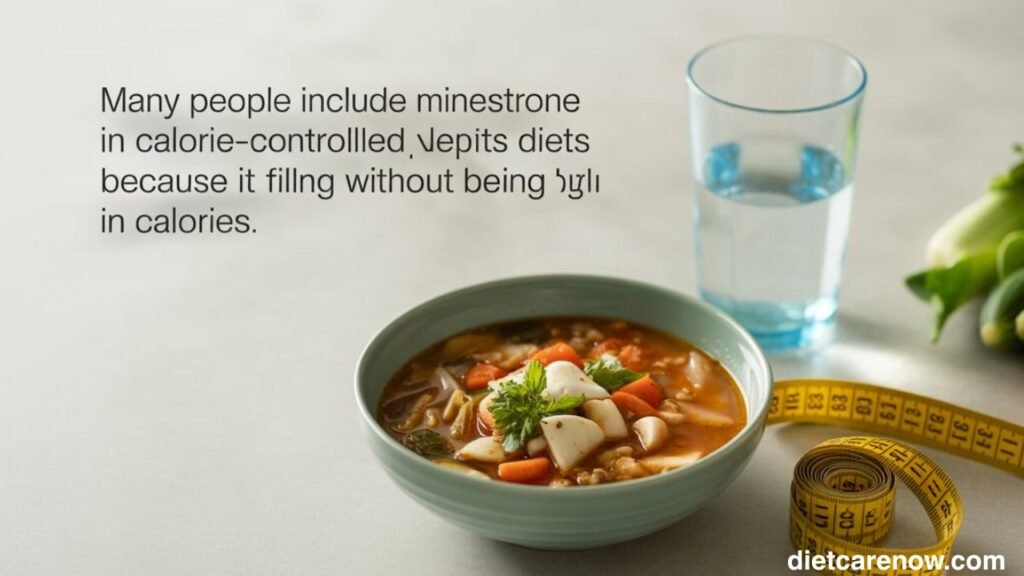
Many people include minestrone in calorie-controlled diets because it is filling without being high in calories. The combination of vegetables, beans, and broth creates a high-volume, low-calorie meal. This helps satisfy hunger while supporting weight management.
Fiber slows digestion and helps keep you full longer. Beans provide protein that stabilizes appetite. The broth adds warmth and comfort without adding many calories. Research consistently shows that low-calorie soups eaten before or during meals can help reduce total calorie intake. Minestrone works well both as a starter and as a complete meal.
Low-Sodium vs Regular Minestrone Soup
Sodium content is one area where minestrone can differ significantly depending on how it is prepared.
Homemade Minestrone
- It can be low in sodium if you use low-sodium broth
- Allows control over added salt
- Typically healthier for people who watch their blood pressure
Store-Bought or Canned Minestrone
- Often much higher in sodium
- May contain preservatives or flavor enhancers
- Some versions use concentrated broth, which raises salt levels
If you enjoy minestrone regularly, homemade or low-sodium packaged options are the better choice. You can also add extra herbs to boost flavor without relying on salt.
How Pasta or Rice Affects the Nutritional Profile
The starch in minestrone does more than add texture. It affects the soup’s carbohydrate content and energy level.
Regular Pasta or White Rice
- Adds quick-digesting carbohydrates
- Increases calories slightly
- Works well for people who need energy-dense meals
Whole-Grain Pasta or Brown Rice
- Provides more fiber and B vitamins
- Helps maintain steady energy
- Improves the soup’s nutritional balance
Using whole-grain options is an easy way to increase the health benefits of minestrone without changing its flavor.
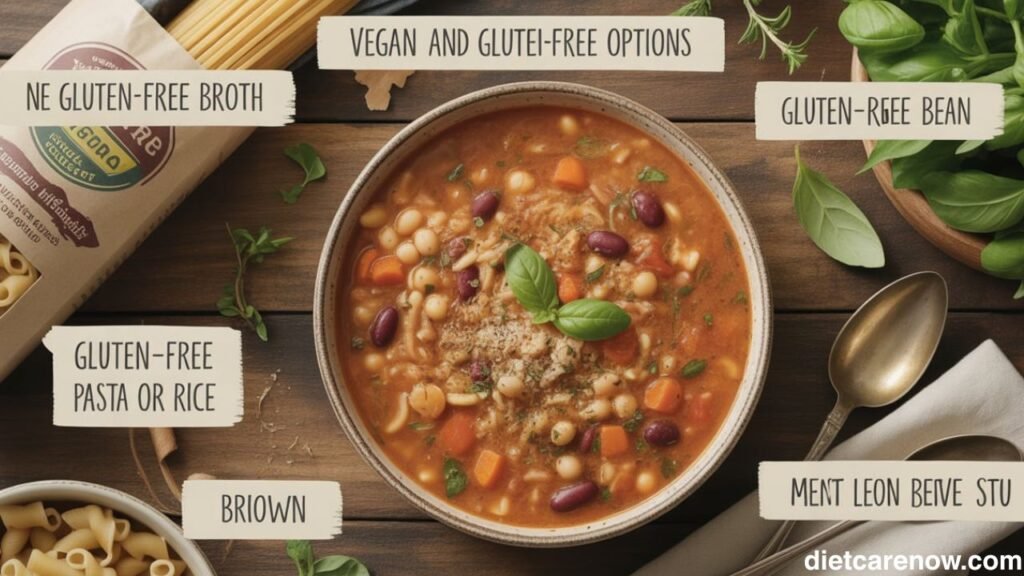
Vegan and Gluten-Free Options
Minestrone is naturally easy to adapt to different dietary needs.
Vegan Options
To make vegan minestrone:
- Use vegetable broth
- Skip cheese toppings
- Ensure pasta is egg-free
The soup still provides plenty of protein through beans.
Gluten-Free Options
For gluten-free minestrone:
- Use gluten-free pasta or brown rice
- Ensure broth does not contain gluten
- Check canned beans for additives
This keeps the soup accessible to people with gluten sensitivity or celiac disease while maintaining its rich nutritional profile.
Tips for Making Your Minestrone Healthier
A few simple changes can boost the nutrition of your minestrone even more.
Ingredient Tips
- Use whole-grain pasta or brown rice
- Add leafy greens near the end of cooking
- Choose low-sodium broth
- Add extra beans for more fiber and protein
Cooking Tips
- Sauté vegetables in a small amount of olive oil
- Allow the soup to simmer to deepen the flavor
- Freeze extra portions for quick, healthy meals
Portion Tips
- Pair a bowl with a small salad for extra nutrients
- Avoid adding too much cheese or salt
- Serve with whole-grain bread for a balanced meal
Conclusion: Why Minestrone Soup Is a Nutritious Staple
Minestrone stands out because it is simple, nourishing, and adaptable. The combination of vegetables, beans, herbs, and broth creates a meal that supports heart health, digestion, weight management, and overall wellness. Each ingredient contributes important nutrients, and the flexibility of the recipe makes it easy to tailor to any diet.
Whether you prepare it with seasonal vegetables, make it vegan, or boost it with whole grains, minestrone remains a dependable and nutritious dish. It brings warmth and comfort while delivering a wide range of vitamins, minerals, and fiber. This is why it has been loved for generations and continues to be a smart addition to a balanced diet.