

Peach puree is simply the flesh of ripe peaches, washed, peeled (in many cases), pitted, and then blended into a smooth, soft‑to‑eat paste. For babies starting out on solids, it’s a gentle, naturally sweet option that many parents choose because of its mild flavor and nutritional value. Peach Puree for Baby As a first or early solid food, peach puree offers hydration, vitamins, and fibre — and because peaches are naturally soft when ripe, they tend to mash or puree smoothly, which makes them ideal for spoon‑feeding.
Parents often turn to peach puree to introduce a fresh fruit taste without added sugar or salt. It can help babies experience new flavors while getting nutrients that support their growth.
When to Introduce Peach Puree to Your Baby
Most pediatric and infant‑feeding guidelines recommend introducing complementary foods — such as purees — around 6 months of age.
Signs your baby may be ready include:
- They can sit up (with or without support) and hold their head steady.
- They show coordination of eyes, hands, and mouth: for example, reaching for food or opening their mouth when offered a spoon.
- They swallow rather than push food out with their tongue.
Waiting until babies are developmentally ready helps ensure their digestive systems, swallowing reflex, and chewing/swallowing abilities are sufficiently developed.
That said, every baby develops differently. If your baby shows readiness signs a little earlier or later, a chat with your pediatrician or trusted health professional can help you decide.
Also read: /sloppy-joe-nutrition-facts/

Nutritional Benefits of Peaches for Babies
Peaches bring a range of nutrients that make them a healthy choice for infants:
- Vitamins: Peaches contain vitamin C and vitamin A (from beta‑carotene), both important for immune support, healthy skin, and eye development.
- Minerals: They provide good amounts of potassium, and smaller amounts of magnesium, phosphorus, and trace minerals — helpful for overall growth and body functions.
- Fiber and Water: Peaches offer dietary fiber and are naturally high in water content, which supports digestion and helps with regular bowel movements.
- Antioxidants and Phytonutrients: Fresh peaches contain antioxidants and other plant compounds that may help protect cells and support overall health.
Because they’re low in fat and naturally sweet, peaches can satisfy a baby’s taste for mild sweetness without needing added sugar — a big plus when establishing healthy eating habits early on.
Is Peach Puree Safe for Babies?
Yes — when prepared properly, peach puree is generally safe, but certain precautions matter.
Allergy considerations
Although peaches are generally safe, babies can have sensitivities. For some individuals, especially those with pollen allergies, stone fruits (like peaches) may trigger a mild reaction known as oral allergy syndrome (itchiness or swelling of the mouth/lips). If there is a family history of allergies, it’s always wise to introduce new foods one at a time and watch for any reaction. Many guidelines recommend waiting 3–5 days between new foods when starting solids.
Choking risk
Pureed foods are among the safest first solids because they pose minimal choking risk.
However, if you move too quickly to lumpy or chunky textures (or give whole/large pieces of fruit) before your baby is ready, choking risk increases.
Hygiene and safe preparation
Always wash your hands, clean surfaces and utensils carefully, and ensure peaches are washed thoroughly (to remove dirt or pesticides). If you’re peeling or pitting peaches, make sure there are no bits of skin or hard pit remaining. If steaming or boiling, allow food to cool completely before feeding.
How to Choose the Best Peaches for Baby Puree
To make the most nutritious and safe peach puree:
- Pick ripe peaches: Look for peaches that yield gently to light pressure, have a sweet aroma, and a vibrant color. Overly firm peaches may not mash well.
- Prefer fresh, whole peaches over canned: Fresh peaches tend to retain more antioxidants.
- Wash thoroughly: Rinse well under running water to remove dirt or possible surface residues before peeling or cutting.
- Consider organic (if available): If you’re concerned about pesticide exposure, organic peaches might offer some peace of mind — but whether organic or conventional, washing is important.
- Check texture and softness: For younger babies, choose very soft, ripe peaches to make blending easier and ensure a smooth, creamy puree.
Step‑by‑Step Guide: How to Make Peach Puree at Home
Here is a simple, safe way to prepare homemade peach puree:
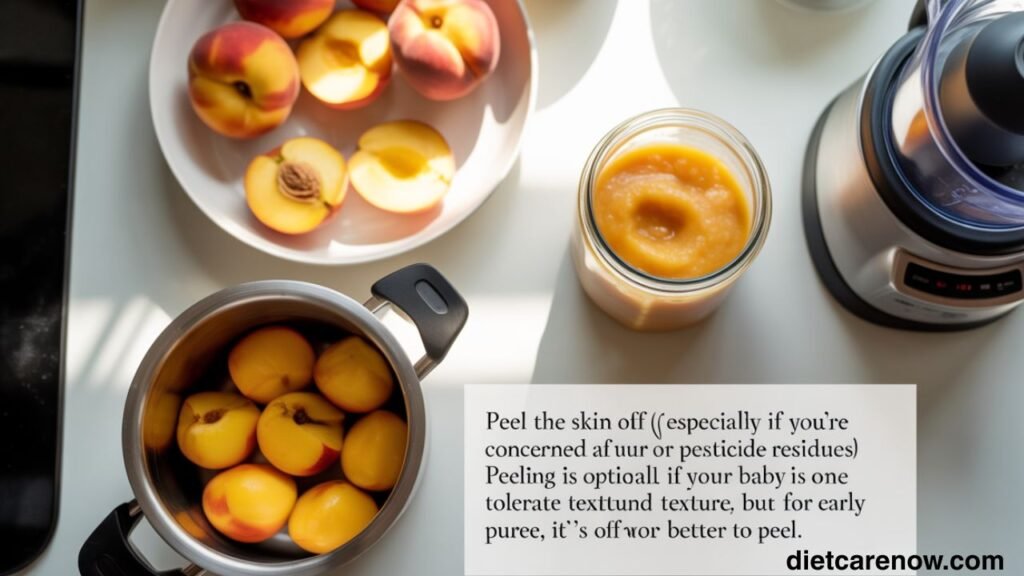
- Wash the peaches thoroughly under running water.
- Peel the skin off (especially if you’re concerned about texture or pesticide residues). Peeling is optional if your baby is older and tolerates some more fibrous texture, but for early puree, it’s often better to peel.
- Cut the peach in half, remove the pit, then slice the flesh into small chunks.
- Steam or boil the peach pieces for a few minutes, until tender. Steaming preserves more nutrients.
- Blend the softened peach flesh — add a little cooled, boiled water, breastmilk, or formula to reach a smooth, baby‑friendly consistency.
- Cool the puree to lukewarm or room temperature before feeding.
Storage Tips for Peach Puree
- Refrigeration: Homemade puree can typically be stored in a clean, sealed container in the refrigerator for about 24–48 hours.
- Freezing: For longer storage, you can freeze portions (e.g., in ice‑cube trays). Once frozen, transfer to labeled freezer bags. Use within 1–2 months if possible.
- Thawing: Thaw in the refrigerator overnight or use a lukewarm water bath. Never defrost on the kitchen counter at room temperature for long.
- After serving: Discard any leftover puree that the baby did not finish. Re‑using or “double‑dipping” can introduce bacteria.
Peach Puree for Babies Without Cooking
If peaches are very soft, ripe, and fresh, some parents may wonder if they can blend them raw and feed them to older infants. This can be okay — but with caution:
- Make sure the peach is very ripe, soft, and washed thoroughly.
- Peel the skin off (skin can be fibrous and may be harder to digest or swallow).
- Blend until absolutely smooth and lick‑free (no chunks.
- Offer only small amounts at first to check tolerance.
Because cooking helps break down fibers and may reduce the risk of mild fruit‑related reactions (like for skin), many experts still prefer a lightly cooked/steamed puree for very young babies.
Best Texture Options Based on Baby’s Age
As your baby grows, you can gradually change the texture of peach-based foods:
- 6–7 months: Smooth, thin puree — ideal for first feeds.
- 7–9 months: Slightly thicker puree or very smooth mashed fruit. You might leave in small, soft bits for texture.
- 9–12 months: Soft mashed fruit or soft finger-food pieces (if baby is practicing grasping). For example, soft steamed peach slices or small soft chunks (as long as the baby is supervised and able to handle them).
- 12+ months (or as advised): Soft fruit pieces, mixed with other foods like yogurt, oats, or cereals — encouraging chewing and self-feeding.
Moving textures gradually helps your baby learn chewing, swallowing, and self-feeding skills. It also supports oral‑motor development.
Delicious Peach Puree Combinations for Babies
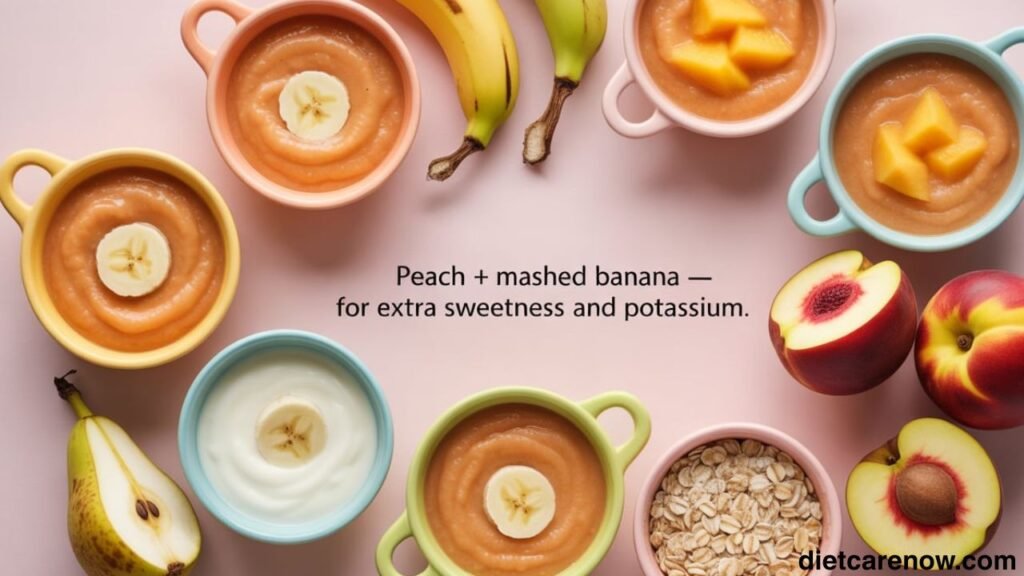
Once your baby tolerates plain peach puree, you can try mixing it with other gentle, baby‑friendly foods for new flavors and nutrients. Some good combinations:
- Peach + mashed banana — for extra sweetness and potassium.
- Peach + cooked oats — a great breakfast option once baby is used to solids.
- Peach + plain yogurt (unsweetened, full‑fat) — after dairy is introduced (commonly after 6 months).
- Peach + pear or apple (cooked/steamed) — light fruit mix for variety.
- Peach + soft-cooked carrot or pumpkin — for a mild, vegetable–fruit texture.
- Peach + mild cereal (iron‑fortified baby cereal) — to mix fruit nutrients with grains.
When combining foods for the first time, continue introducing new mixtures gradually to watch for tolerance.
How to Serve Peach Puree to Your Baby
- Use a clean, soft baby spoon. Make sure the puree is lukewarm or room temperature.
- Start with a small amount — maybe 1–2 teaspoons — especially at first feedings.
- Offer puree as a complement to breastmilk or formula; milk remains the baby’s main source of nutrition at the start.
- Feed the baby while is seated upright (not lying down), ideally in a high chair, and stay with them throughout the meal.
Rotation and variety matter — give a mix of fruits, vegetables, cereals, etc., over time, so your baby gets a range of nutrients.
Signs Your Baby Is Ready for More Peach‑Based or Solid Foods
As babies grow, you’ll notice some signals that they may be ready for more texture and variety:
- They try to grab food, bring their hands to their mouths, or show interest when you eat.
- They start chewing motions, even with smooth foods.
- They’re able to swallow purees easily without gagging or coughing.
- They handle thicker textures without spitting out.
- They seem bored with purees and show curiosity about other foods or finger foods.
When you see these signs, you can begin offering textures appropriate to their development — e.g., thicker purees, soft mashed fruit, or soft finger‑food pieces.
Common Questions Parents Ask About Peach Puree
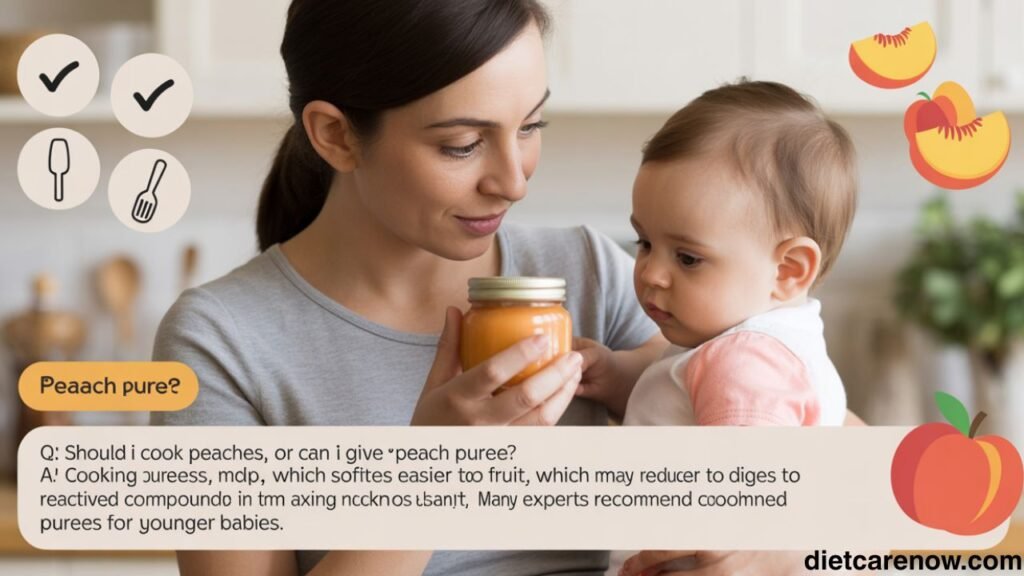
Q: Should I cook peaches, or can I give raw peach puree?
A: Cooking (steaming or boiling) helps soften the fruit, which makes purees easier to digest and may reduce mild reactive compounds in the skin. Many experts recommend cooked purees for younger babies.
Q: Is it okay to keep the skin on?
A: The skin can add fiber and nutrients, but it may be fibrous and harder to blend into a smooth puree. For first feeds, peeling is usually safer. Later, when the baby handles texture better, small peeled slices or soft pieces may be okay (watch closely for choking).
Q: Can I use canned peaches or store‑bought baby peach purée?
A: While commercially prepared foods are convenient, homemade purees give you control over freshness, texture, and avoid added sugars or preservatives. If using canned peaches, ensure they’re unsweetened and rinsed; avoid syrups or added sugars.
Q: Is it okay to add sugar or salt to peach puree?
A: No. Babies under one year generally should not be given added sugar or salt. Their kidneys and taste preferences are still developing. Best to keep peach puree plain.
Q: What if the baby spits it out or dislikes peaches?
A: That’s normal. Many babies require repeated exposure before they accept new flavors. Keep offering in small amounts and stay patient. Also, try mixing with other mild foods (e.g., banana or yogurt) once the baby tolerates purees.
Mistakes to Avoid When Preparing Peach Puree
- Using unripe or hard peaches — these can be difficult to blend and may taste bland or sour.
- Leaving skin and pit fragments — these can pose choking hazards or be hard to digest.
- Adding sugar, honey, salt, or other flavorings — unnecessary and not recommended for babies.
- Serving when hot — always cool food to a safe temperature before feeding.
- Leaving leftover puree out at room temperature, or feeding directly from the jar: discard leftovers and always use a clean spoon.
- Introducing too many new foods at once — this makes it harder to spot allergies or intolerance.
Conclusion and Final Tips for Parents
Peach puree can be a wonderful first fruit for your baby — naturally sweet, nutritious, easy on tiny tummies, and a simple way to introduce fresh fruit into their diet. When prepared safely and offered at the right developmental stage (around 6 months), it adds vitamins, minerals, fibre, hydration, and gentle flavor.
Start slowly, offer small amounts, and pay attention to your baby’s cues. Watch for readiness signs, be patient if they resist at first, and avoid unnecessary additives like salt or sugar. Once the baby grows and becomes more confident, you can experiment with textures and fruit‑plus‑cereal or fruit‑plus‑yogurt combinations.
As with all new foods — especially in the first year — keep your baby’s pediatrician or health‑care provider in the loop. Every baby is different. With a proper approach, peach puree can be part of a healthy, balanced start to solid foods.