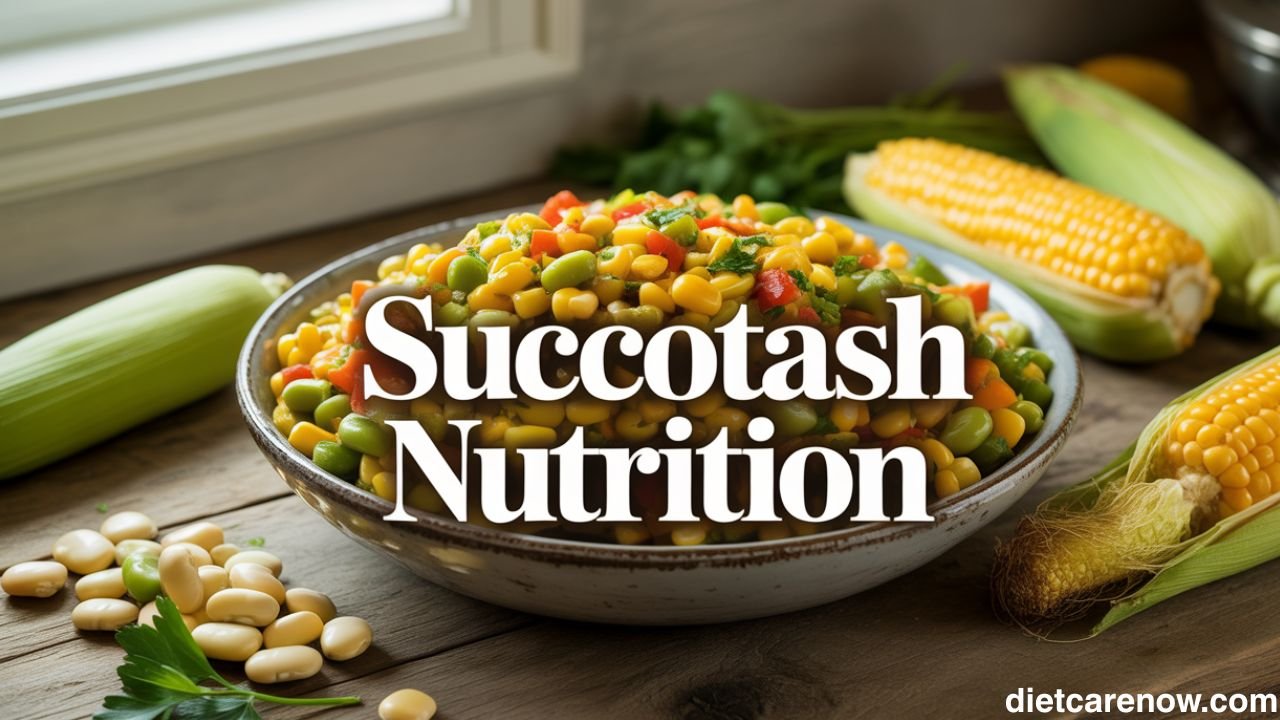
If you’ve ever attended a Southern gathering or flipped through an old American cookbook, chances are you’ve come across succotash. This colorful medley of corn and lima beans has been gracing tables for centuries — simple, hearty, and packed with tradition. Succotash Nutrition is best for health.
The word succotash comes from the Narragansett Native American word msíckquatash, meaning “boiled corn kernels.” Native Americans were the first to prepare versions of this dish, often combining corn with beans or squash, a trio now known as the “Three Sisters.” These ingredients were more than food — they represented sustenance, balance, and community.
What Is Succotash Made Of?
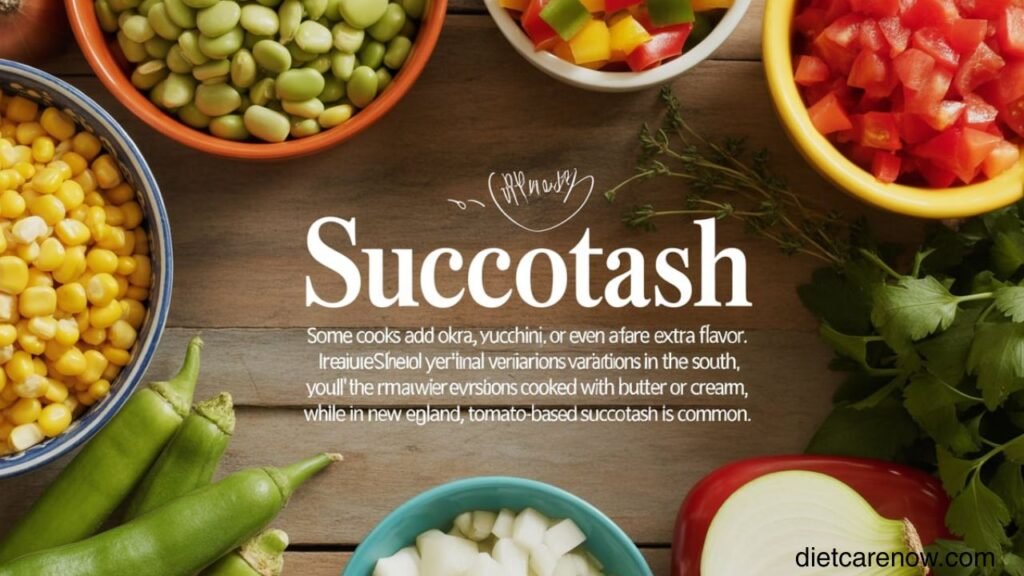
At its heart, succotash is a celebration of simple, yet delicious, ingredients. The classic version combines:
- Lima beans (or butter beans)
- Corn kernels — fresh, frozen, or canned
- Bell peppers
- Tomatoes or tomato juice
- Onions and sometimes garlic
Some cooks add okra, zucchini, or even bacon for extra flavor. Regional variations abound: in the South, you’ll find creamier versions cooked with butter or cream, while in New England, tomato-based succotash is common.
The type of ingredients you use can affect the nutrition profile. Fresh corn and beans retain more vitamins and natural sweetness. Frozen versions are convenient and retain most nutrients thanks to quick-freeze technology. Canned succotash, on the other hand, may contain added sodium or preservatives, so checking labels is important if you’re watching your salt intake.
Also read: /beetroot-and-carrot-soup/
Nutritional Overview of Succotash
Succotash may look like comfort food, but it’s surprisingly nutrient-rich. A one-cup serving of homemade succotash typically provides around 180–220 calories, depending on preparation.
Here’s what you get per serving (approximately 1 cup):
- Calories: 200
- Carbohydrates: 35–40 g
- Protein: 7–9 g
- Fat: 4–6 g
- Fiber: 6–8 g
It’s also a good source of vitamin C, vitamin A, B vitamins, magnesium, potassium, and folate. These nutrients support energy metabolism, muscle function, and immune health.
Because it contains both beans and corn, succotash offers a balance of macronutrients — complex carbs for energy, plant-based protein for muscle repair, and fiber for digestive health.
Calories in a Bowl of Succotash
Calories in succotash can vary widely based on ingredients and cooking method.
- Classic homemade succotash: ~200 calories per cup
- With added butter or cream: ~250–300 calories
- Vegan version (olive oil): ~180 calories
- Store-bought canned version: ~160–220 calories (check the label for sodium and additives)
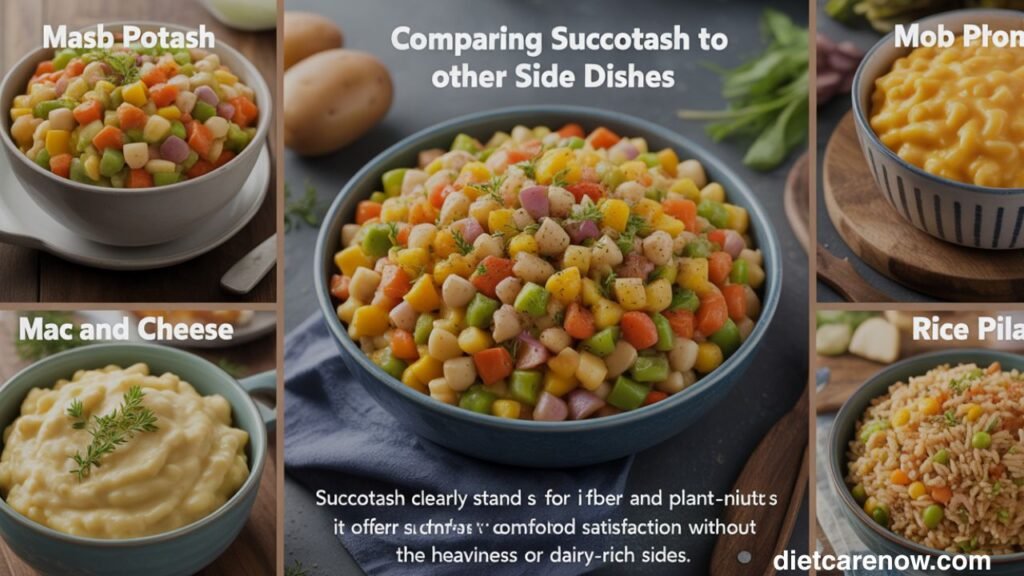
If you sauté your vegetables in oil or mix in bacon, the calorie count can climb quickly. On the other hand, skipping butter and relying on herbs, lemon juice, or light broth can keep it calorie-friendly.Compared to other side dishes, succotash holds up well. A cup of mashed potatoes with butter can top 250 calories, and mac and cheese often exceeds 300. Succotash delivers flavor and comfort with fewer calories — and far more fiber.
Protein Content: Is Succotash a Good Source of Plant Protein?
Yes — succotash is an excellent plant-based protein source. Lima beans provide about 6–7 grams of protein per cup, while corn adds another 3 grams. Together, they make a complete amino acid profile when eaten as part of a balanced diet.
The combination of legumes and grains is key. Corn is low in lysine, an essential amino acid that beans have in abundance. Lima beans, on the other hand, are lower in methionine, which corn provides. This complementary pairing gives your body all the amino acids it needs for healthy muscles, tissue repair, and enzyme function.
For vegetarians and vegans, succotash offers a satisfying, nutrient-dense protein option — especially when paired with brown rice or quinoa.
Fiber Power: How Succotash Supports Digestive Health
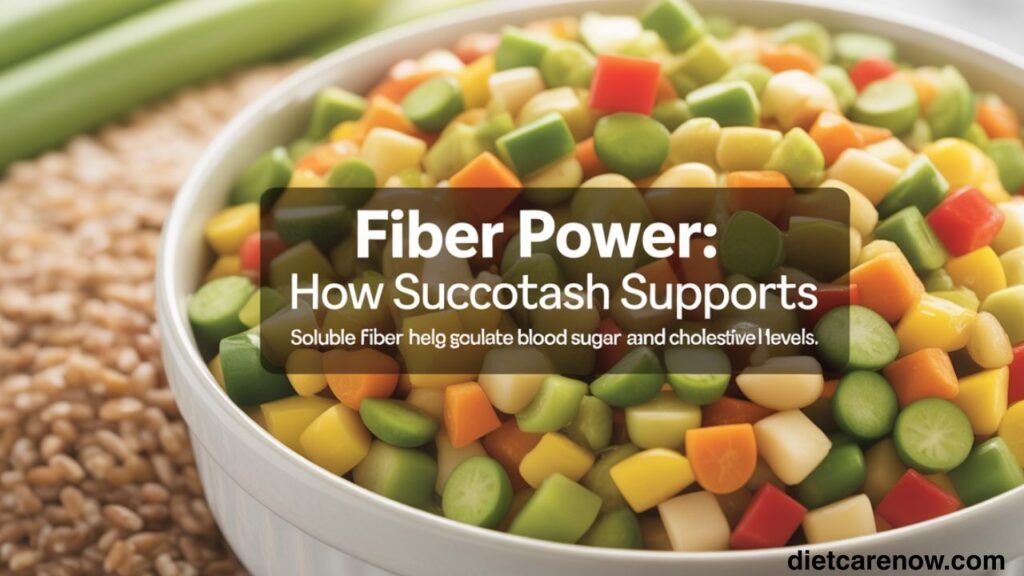
Each cup of succotash contains about 6–8 grams of dietary fiber, which is around one-quarter of your daily needs. Both corn and lima beans are naturally high in soluble and insoluble fiber.
- Soluble fiber helps control blood sugar and lower cholesterol.
- Insoluble fiber supports regular digestion and prevents constipation.
Fiber-rich meals like succotash promote satiety, helping you feel fuller longer. This makes it easier to manage portion sizes and reduce unnecessary snacking — a simple yet effective way to support weight management.
Vitamins and Minerals Found in Succotash
Succotash is a nutritional mosaic, packed with micronutrients that play crucial roles in overall health:
- Vitamin C: From corn and bell peppers; supports immunity and skin health.
- Folate: From lima beans; vital for cell growth and red blood cell formation.
- Magnesium and potassium: Help regulate muscle and heart function.
- Vitamin B6 and thiamine: Aid energy metabolism.
- Iron and zinc: Support oxygen transport and immune defense.
Cooking methods can influence nutrient retention. For example, boiling lima beans for too long can reduce vitamin C levels, while lightly sautéing or steaming helps preserve their natural goodness. To keep nutrients intact, cook just until tender and avoid over-simmering.
Antioxidant and Phytonutrient Benefits
Beyond vitamins and minerals, succotash offers a wealth of antioxidants and plant compounds that promote long-term health.
Corn contains lutein and zeaxanthin, two carotenoids linked to eye health. Lima beans provide polyphenols, which help combat inflammation and oxidative stress. Bell peppers and tomatoes add vitamin C and lycopene, further boosting the antioxidant profile.
These compounds work together to reduce cellular damage, supporting heart health and lowering the risk of chronic diseases. Regularly eating colorful, plant-based dishes like succotash can make a meaningful difference in your body’s ability to fight everyday stressors.
Is Succotash Healthy? Expert Analysis
In short, yes, succotash is a healthy dish when prepared thoughtfully. Its balance of complex carbs, fiber, and plant protein makes it both filling and nourishing. It’s naturally gluten-free, cholesterol-free, and can easily fit into vegan or vegetarian diets.
However, moderation matters. If made with heavy cream, butter, or bacon, its fat and sodium levels can spike. Store-bought canned versions may also contain more salt than you’d expect.
Experts recommend keeping your homemade version simple: fresh vegetables, olive oil, herbs, and a sprinkle of salt. This version supports heart health, stable energy, and overall wellness.
Healthy Succotash Variations
There’s no single “right” way to make succotash. Here are some nutrient-focused twists:
- Low-fat version: Use olive oil instead of butter.
- Low-sodium version: Choose no-salt-added canned beans and corn.
- Vegan version: Skip dairy; use fresh herbs and lemon juice for brightness.
- High-protein version: Add edamame or chickpeas.
- Fiber boost: Toss in kale, spinach, or diced zucchini.
- Whole grain twist: Mix with quinoa or brown rice for a complete meal.
These small swaps can make a big nutritional difference without sacrificing taste.
How to Make a Nutrient-Dense Succotash at Home
Here’s a simple, wholesome recipe that brings out the best in this classic dish:
Ingredients:
- 1 cup lima beans (fresh or frozen)
- 1½ cups corn kernels (fresh or frozen)
- 1 red bell pepper, diced
- 1 small onion, chopped
- 1 tomato, diced
- 1 tablespoon olive oil
- Salt and pepper to taste
- Optional: 1 teaspoon smoked paprika or fresh herbs (parsley, thyme)
Instructions:
- Boil the lima beans for 10 minutes, then drain.
- Add onion and bell pepper; sauté until soft.
- Add corn and tomato, then stir in lima beans.
- Season with salt, pepper, and paprika.
- Cook for another 5 minutes and serve warm.
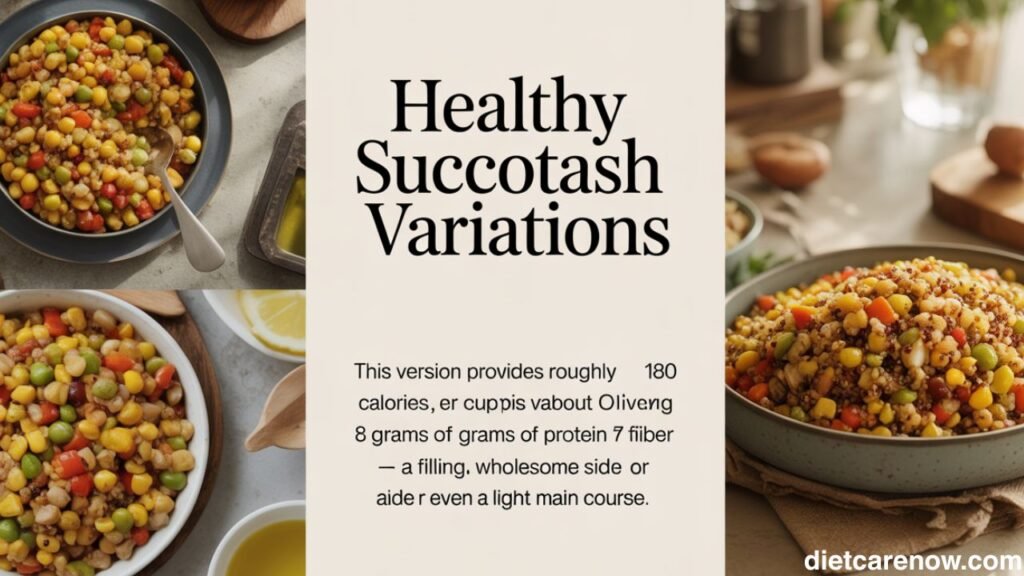
This version provides roughly 180 calories per cup, with about 8 grams of protein and 7 grams of fiber — a filling, wholesome side or even a light main course.
Succotash for Weight Loss and Balanced Diets
Because of its high fiber and moderate protein content, succotash can be a great addition to weight loss plans. The fiber slows digestion, keeping you satisfied, while the low-fat and calorie content make it easier to stay within daily goals.
To make it even lighter:
- Use little or no oil (a quick spray works).
- Add extra vegetables for volume.
- Pair with lean proteins like grilled chicken or tofu.
Its combination of nutrients supports balanced blood sugar levels, making it ideal for those managing diabetes or simply aiming for steady energy throughout the day.
Comparing Succotash to Other Side Dishes
Let’s see how succotash compares nutritionally:
| Side Dish | Calories (1 cup) | Fiber | Protein | Fat |
|---|---|---|---|---|
| Succotash | ~200 | 6–8 g | 7–9 g | 4–6 g |
| Mashed Potatoes (with butter) | ~250 | 2 g | 3 g | 10 g |
| Mac & Cheese | ~320 | 1 g | 10 g | 15 g |
| Rice Pilaf | ~220 | 1–2 g | 4 g | 6 g |
Succotash clearly stands out for its fiber and plant-based nutrients. It offers comfort food satisfaction without the heaviness of starch- or dairy-rich sides.
Storing and Reheating Succotash Without Losing Nutrition
Succotash stores well and can be made in advance. Here’s how to keep it fresh:
- Refrigeration: Store in an airtight container for up to 4 days.
- Freezing: Freeze in portions for up to 2 months.
- Reheating: Warm on low heat with a splash of broth or water to prevent drying out.
Avoid overcooking during reheating, as that can reduce vitamin content and soften the texture too much. For best results, reheat just until warm.
Conclusion: The Nutritional Legacy of Succotash
Succotash may have humble roots, but its nutritional value is anything but ordinary. This blend of beans and corn represents centuries of culinary wisdom — combining flavor, balance, and nourishment in one colorful bowl.
It’s rich in fiber, vitamins, and plant protein, making it one of the most underrated comfort foods you can eat. Whether you’re exploring plant-based options, managing your weight, or just looking for a healthy side, succotash fits beautifully into any diet.
So, next time you’re planning a meal, give this timeless dish another look. Make it fresh, make it colorful, and enjoy the kind of comfort food that’s as good for your body as it is for your taste buds.