
When we talk about “community grains,” what we’re really referring to is a movement toward locally grown, regionally milled whole grains—think wheat, barley, oats, rye—that bypass the industrial commodity chain and instead build closer links among farmers, millers, and consumers. The idea is simple: reconnect food to the place it comes from, preserve nutrient-rich whole grain and heritage varieties, and support regional food systems. One organisation that embodies this movement is Community Grains, based in California. Their mission is “to restore a vibrant local grain economy in California — improving the health of our community and our environment in a big way.”
This is quite different from commercial grain production. In the mainstream model, large farms produce high-volume, commodity grains often far from where they’re consumed; processing tends to strip out bran and germ; the supply chain is long and opaque. By contrast, community grain systems emphasise regional sourcing, whole‐grain integrity, transparency, and sustainable practices.
Origins of this idea go back to the revival of small‐scale grain growing, heritage and locally adapted varieties, and artisan milling. The impact? Beyond better nutrition, you get stronger local economies, more resilient farms, and even biodiversity benefits. For example, local grain systems are gaining traction across the U.S. as part of the broader “whole grain” and “local food” movement.
The History and Founding of Community Grains
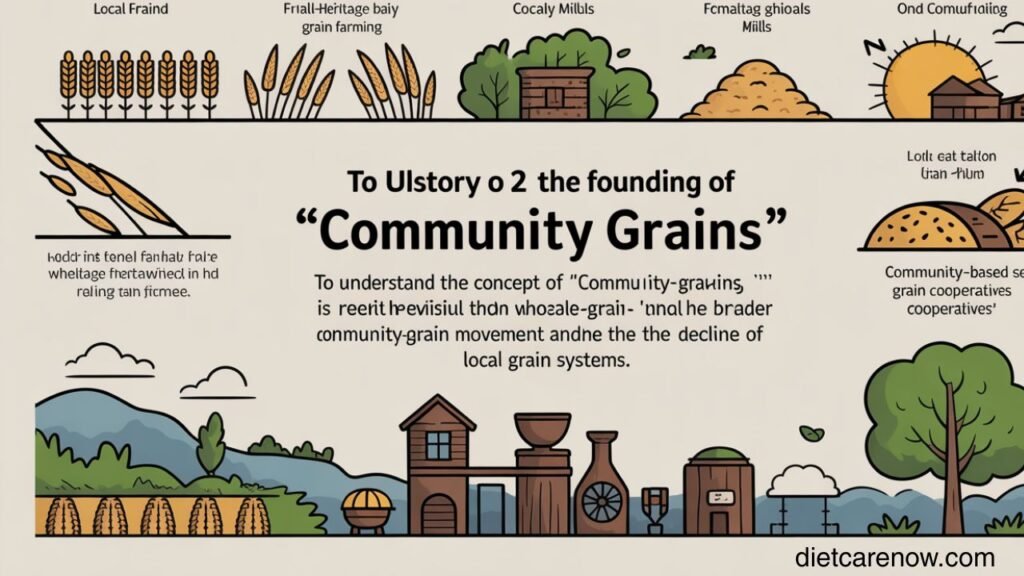
To understand the concept of “community grains,” it is helpful to revisit the broader whole-grain movement and the decline of local grain systems. Historically, farms were more local, mills more regionally distributed—there were thousands of small mills in the U.S. in the early 20th century. As large-scale industrial agriculture and grain trading consolidated, many small mills shut down, and grain supply chains became national or global. Small farms grew fewer diverse grains; the emphasis shifted toward high yield, compatibility with large-scale processing, and commodity markets.
Enter the impetus for a change. A few pioneering farmers, millers, bakers, and food system advocates recognized the decline of local grain economies, the loss of variety, nutritional deficiencies, and the weak connections between the field and the table. They began experimenting with heritage grains, regional collaborations, and local milling.
Also read: /chicken-thigh-nutrition-per-ounce/
Understanding the Whole Grain Revolution
To appreciate community grains, you must understand the difference between whole grains and refined grains. Whole grains retain all parts of the kernel—the bran, germ, and endosperm. In contrast, refined grains typically have the bran and germ removed, which carries away much of the fibre, vitamins, minerals, and phytonutrients. The difference is meaningful in terms of nutrition. Whole grains are linked in multiple studies to better cardiovascular health, improved digestion, reduced risk of type 2 diabetes, and more stable energy levels. The movement toward whole grains has roots in public health and dietary guidelines.
What community grains emphasise is a “100 % whole grain transparency.” In many grain supply chains, you might see “whole wheat” on a label, but the actual sourcing, milling date, variety, and chain of custody may be obscure. With the community grain model, you often get to know the farmer, the variety of grain, the mill date, and the processing method. For example, from the site of Community Grains,
Why does knowing the source matter? Grains can vary dramatically in flavour, nutrition, cultivation practices, and sustainability depending on variety, region, soil health, harvesting, and milling methods. When you know your grain source, you can feel confident about quality, integrity, and the story behind your food.
Hence, the “whole grain revolution” is not just about swapping out white flour for whole wheat; it’s about reconceiving how grains are grown, processed, and consumed—with full supply chain awareness, regional adaptation, heritage, and transparency. Community grains sit squarely in that revolution.
The Philosophy Behind Community Grains
At the heart of community grains is a philosophy that ties together transparency, sustainability, local economy, and truly whole‐grain integrity. Let’s break that down.
The “True Whole Grain” standard. Many products claim to be whole grain, but the community grains movement demands that the kernel remains intact: bran, germ, and endosperm; minimal processing that preserves nutrients and flavour; and no blending so heavily with inferior refined grains. Community Grains uses the term “true whole grain” to stress that commitment.
Transparency and traceability. Knowing the farmer, the variety, the mill date, and the milling method—all these details matter. For example, Community Grains lists press coverage about how their sourcing contracts with farmers, heritage wheat varieties, and traceability.
Sustainability and local economy. The model encourages sustainable farming practices—often organic or regenerative, lower chemical inputs, rotational cropping, and encouraging biodiversity of grain varieties. By keeping production regional and linking farmers to consumers, the model supports local economies, reduces long transport, and fosters community resilience. For instance, the Ellen MacArthur Foundation highlights how Community Grains contributes to biodiversity by encouraging heritage grain varieties and local sourcing.
Bridging farmers, millers, and consumers. The movement seeks to collapse the long chain of processed grain—from large farms to multinational processors to retailers—and instead create shorter, more meaningful chains: a farmer grows heritage wheat, the mill processes it locally, a bakery or consumer uses the flour or pasta—and ideally, you know that chain. This builds trust, enables fair returns to farmers, and gives consumers a deeper connection to their food.
How Community Grains Supports Local Farmers
One of the biggest advantages of community grain systems is the direct benefit to farmers—and through them, to their communities and local economies.
Building regional grain economies. Instead of shipping grain thousands of miles and processing it in giant national mills, local grain systems keep production close to home. This means revenue stays within the region, farm viability improves, and local supply chains strengthen. The “local grains movement” is increasingly seen as part of this.
Empowering small and mid-scale farmers. Large commodity systems often favour big monoculture farms and mass production. Community grain systems open space for smaller farms to participate, grow heritage or regionally adapted varieties, diversify cropping, charge more for value-added products, and connect directly to buyers.
Sustainable farming practices are encouraged. Many farms in these systems adopt organic or regenerative practices: crop rotation, soil health management, biodiversity, and lower chemical input. This contributes to healthier soil, more resilient systems, and long-term viability. The Ellen MacArthur Foundation article on Community Grains emphasises biodiversity benefits: supporting heritage and diverse grain varieties, giving farmers incentives to grow them.
The Milling Process: From Field to Flour
So, how does grain go from the field to your flour or pasta in a community grain system? It helps to understand the milling and processing side, because this is where a lot of quality, transparency, and difference happens.
How grains are sourced and processed. First, a farmer grows a grain variety—often heritage or regionally adapted. After harvest, the grain is cleaned, stored appropriately, and then milled. Milling may happen locally, in a smaller-scale mill, rather than in massive industrial mills. For example, small mills, artisan mills, or regional mills care for freshness and variety.
Stone milling vs roller milling.
- Stone milling: Grain is ground between two stones; the process typically retains the bran, germ, and endosperm in one pass, produces flour with more flavour, texture, and often higher nutrient retention. It’s slower, less industrial.
- Roller milling: More common industrially, grains pass through rollers, often removing bran and germ, sometimes re-adding parts, targeting consistency and high volume. It often strips flavour and nutritional depth.
Community grain systems tend to favour stone or low‐temperature milling to retain nutrients, flavour, texture, and freshness.
Preserving flavour, nutrition, and texture. Freshly milled flour from regional grains often has a richer flavour—nutty, earthy, fuller texture. It retains the germ oils that can be lost in long storage or heavy processing. The freshness also matters: flour goes stale; whole grain flour tends to oxidise faster because of germ oils, so milling close to consumption helps quality.
Importance of freshness in milling. One advantage of regional systems: shorter time from milling to consumer, less transport, and less storage. This helps preserve flavour and nutrients. Also, smaller mills often maintain varietal distinction—so you might know exactly which grain variety is used, when it was milled, and where.
All of this matters because two flours labelled “whole wheat flour” might perform very differently depending on the variety, processing, milling, storage, and freshness. Community grain systems make those differences real and meaningful.
Product Range Offered by Community Grains
Far beyond “just flour,” there’s a growing range of items that showcase the value-added nature of local whole grain systems.
Overview of available products: flours, pastas, cereals, and more. For example, Community Grains offers organic whole-grain flours, pastas made from heritage wheat, hearth breads (via partner bakers,) and other value-added grain products.
Highlight of signature items (e.g., 100% whole grain pasta). One standout is their 100 % whole‐grain pasta made from heritage wheat varieties grown regionally, milled, and prepared to retain full grain integrity. This is a departure from many pastas, which may include refined grains or blends.
How do these products stand out from conventional ones?
- They boast full transparency about sourcing, variety, and milling.
- They use heritage or regionally adapted grain varieties rather than commodity wheat.
- The products retain the full bran and germ, rather than being stripped and bleached.
- The supply chain is shorter and more connected, offering freshness and traceability.
- The flavour profile is often richer, the nutrition higher, the story of the food more compelling.
Nutritional Benefits of Community Grains Products
Let’s dig into the nutrition side. What do you gain by choosing community grain products—even beyond
Comparison with refined grain alternatives. When you compare a true whole grain flour (with bran, germ, and endosperm intact) to a refined flour that has the bran and germ removed, you lose fibre, B-vitamins, magnesium, antioxidants, and phytonutrients. That means less nutritional value per bite.
Health advantages of true whole grains. Research links whole‐grain consumption with lower risk of heart disease, type 2 diabetes, improved gut health, and better weight management. While the website of Community Grains doesn’t list specific studies, the broader literature of the local grains movement emphasises nutritional benefits along with flavour and regional variety. For example, the article on local flour revival notes that local flour tends to retain more of the bran and germ and avoids many additives used in industrial flour.
Impact on gut health, digestion, and energy levels. Whole grains feed the microbiome via the fibre and phytonutrients; they promote slower digestion, more stable blood sugar, longer-lasting energy, and better satiety. For plant-based or balanced diets, they offer a dense, nutritious carb source rather than empty refined carbs.
Ideal for balanced diets and plant-based lifestyles. If you follow a plant-based diet or are simply trying to eat more nutrient-rich calories, choosing flours and grain products from community grain systems can be a smart move. You’re getting grains grown with fewer shortcuts, milled fresher, with heritage variety and full kernel integrity—all of which support better nutrient density.
In short: choosing community grain products isn’t just “another whole-wheat product”; it’s a smarter, more connected whole‐grain choice with nutritional, ecological, and flavour benefits.
Environmental Impact and Sustainability
Beyond nutrition and local economy, community grain systems bring environmental benefits—and it’s worth spelling those out.
How local grain systems reduce carbon footprints. By growing regionally, milling locally, and shortening supply chains, you reduce shipping distances for raw grain, intermediate flour, and finished products. You reduce fossil‐fuel use, packaging, cold storage, and transportation emissions. Also, smaller farms often use less intensive practices than large commodity systems.
Importance of soil regeneration and biodiversity. Many farms in local grain systems use rotational cropping, organic or regenerative practices that build soil health, increase biodiversity, reduce chemical inputs, and support long-term viability. The Ellen MacArthur Foundation article reports that Community Grains encourages on-farm biodiversity by growing multiple grain varieties and heritage lines.
Waste reduction through minimal processing. Because the supply chain is shorter, stores carry less, processed closer to the point of consumption, there tends to be less waste. Also, value-added products in local systems are often packaged modestly, with conscious design.
Community Grains’ commitment to eco-conscious farming. For example, the Community Grains website says they aim “to restore a vibrant local grain economy in California – improving the health of our community and our environment in a big way.”
When you buy a product anchored in community grain systems, you’re voting with your wallet for an agricultural system that prioritises planetary health as well as human health.
Supporting Local Economies Through Grains
Let’s look at the socio-economic ripple effects of community grain systems.
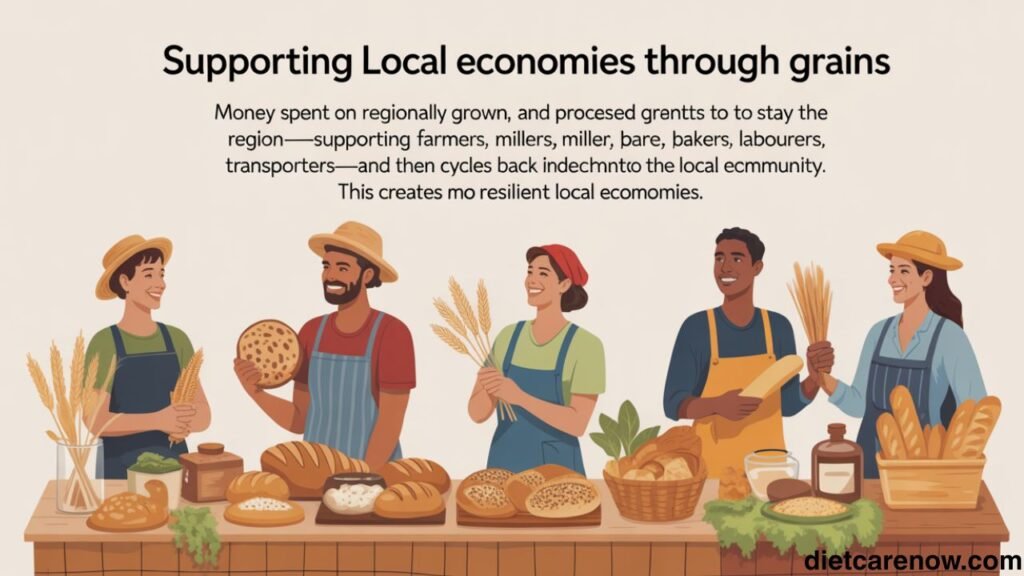
The economic ripple effect of local grain systems. Money spent on regionally grown, milled, and processed grain tends to stay in the region—supporting farmers, millers, bakers, labourers, transporters—and then cycles back into the local community. This creates more resilient local economies.
How grain cooperatives and partnerships strengthen communities. Often, local grain systems are cooperative or partnership‐oriented: farms working together, mills sharing infrastructure, bakers sourcing locally, consumers connected to the story. This strengthens ties across the food system and creates community around food.
Job creation and fair trade practices. Instead of large anonymous commodity operations, local grain systems offer opportunities for small‐scale farming, artisan milling, local baking, and processing enterprises. This means jobs staying local, fairer returns to farmers, and better economic diversification in rural areas.
Long-term benefits for regional food independence. Having a strong local grain economy means a region is less vulnerable to global supply chain shocks, commodity price swings, transportation disruptions, or mass-processing failures. It contributes to regional food sovereignty and resilience. The “local grains movement roundup” by the Whole Grains Council underscores this: “Grains might be considered latecomers to the local foods movement, but they’ve arrived and they’re changing the way many communities think about flavour and flour.”
The bottom line: when you support local grain systems, you’re not only improving your diet—you’re investing in community, regional economy, jobs, resilience, and food culture.
Culinary Uses and Recipes with Community Grains
Let’s talk food. Here’s how community grain products can shine in your kitchen and how chefs and home cooks are using them.
Popular recipes using community grain products.
- Use a 100 % whole‐grain heritage‐wheat flour (from a community grain source) to bake a loaf of sourdough bread. Expect richer flavour, deeper colour, and more texture.
- Make pasta from whole-grain heritage flour (available via Community Grains) and toss with seasonal vegetables, herbs, olive oil, and a little grated cheese for a simple, high-quality dish.
- Use a high-fibre local whole grain cereal or porridge made from regionally milled oats or barley, topped with fresh fruit, nuts, a drizzle of honey, and seeds.
How chefs and restaurants use their ingredients. Artisan bakers increasingly source local whole-grain flours from mills tied to community grain systems because they value flavour, story, and quality. The local grain revival article notes that artisan bakeries use locally milled flour to differentiate themselves.
Baking tips for 100% whole‐grain flours. - Because whole‐grain flours retain bran and germ oils, they absorb more water; you’ll often need slightly more liquid than with refined flour.
- Let the whole‐grain dough autolyse (rest) to allow the bran to hydrate and soften.
- Don’t expect the same rise or texture as the blanched all-purpose flour you’re used to; embrace a bit more density and full flavour.
- Store whole-grain flour in a cool, dry place (or even in the fridge if you live in a warm climate) to slow oxidation of germ oils.
Creative ways to include whole grains in daily meals. - Swap your standard white flour for a regionally milled whole‐grain flour in pancakes or crepes.
- Use whole‐grain pasta as your default pasta, not as a “health food alternative.”
- Make flatbreads or wraps using whole‐grain flours and enjoy with hummus, roasted veggies, or grilled meat/fish.
- Try “grain bowls” using barley or oats or spelt cooked and topped with vegetables, legumes, nuts and a dressing.
By choosing community grain-based ingredients, you’re not only eating better—you’re giving your meals a story and a connection to place, variety, and quality.
Collaborations and Partnerships
An important part of the community grains ecosystem is collaboration: farmers, millers, bakers, chefs, educators, and nonprofits all working together.
Collaborations with farmers, bakers, and chefs. Local grain systems often involve direct contracts between farmers and mills (or brands). For example, Community Grains mentions they contract with farmers to grow heritage wheat locally, fairly and sustainably. Artisan bakers source from local mills; chefs champion heritage grain pastas; farmers partner with mills and bakeries to develop new elevation lines of grain.
Role in food education and sustainability movements. Many community grain initiatives include educational workshops, field days, and community events to help people understand grain growing, milling, and baking. For instance, a blog about a “Grains Field Day” describes an event where farmers and community members came together to connect across the chain—from field to mill.
Examples of community events or workshops. The “Grains Field Day” event by River Valley Community Grains (in New Jersey) invited farmers to meet experts, tour a regional mill, and sample products made from diverse local grains.
Partnerships with academic or nonprofit organisations. Many universities and research labs support grain variety development and small‐mill systems. For example, part of the resurgence of local grains involves breeding and research by institutions like The Bread Lab at Washington State University.
These collaborations matter because they help turn the vision into real-world systems: educating consumers, refining supply chains, developing suitable varieties, improving milling infrastructure, and amplifying the movement.
Challenges in Promoting Local Grain Systems
No system is without obstacles. The community grains movement faces real challenges that it is actively trying to overcome.
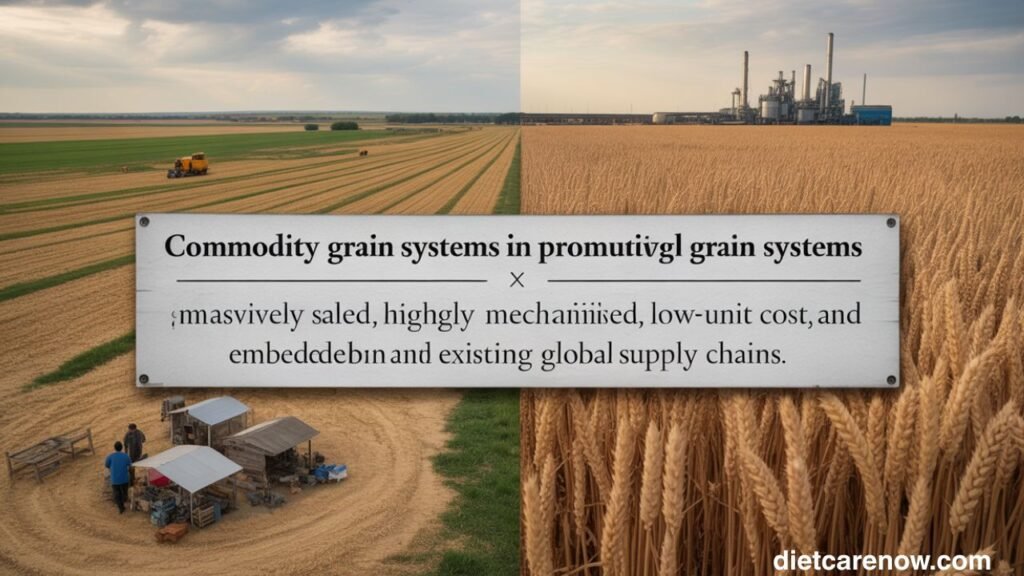
Competition with industrial agriculture. Commodity grain systems are massively scaled, highly mechanised, low‐unit cost, and embedded in existing global supply chains. Local grain systems often cannot match the volume or price of large commodity flour producers. The local grains article acknowledges that small mills “can’t compete with the commodity market” in scale.
Public misconceptions about whole grains. Many consumers think “whole grain” means brown bread or that whole grain flours will be heavy or taste “healthy” in a negative way. There may be taste, texture or usage concerns. Additionally, people may not know or care about the origin, variety or milling date of grains.
Supply chain and pricing challenges. For local grain systems to work, you need the whole chain: farmers growing appropriate varieties, correct harvesting and storage, a mill that can handle smaller volumes, distribution infrastructure, and a market. Missing one link can hinder viability. The article on local flour revival highlights that rebuilding the “middle infrastructure” (mills, granaries, cleaning, separation) is costly and complex.
Steps Community Grains is taking to overcome hurdles. Organisations like Community Grains emphasise transparency, contract farming, heritage varieties, local milling, and storytelling to create value that can justify higher price points. They also highlight biodiversity, sustainability, and community economy as part of that value equation. For example, the Ellen MacArthur Foundation piece shows how Community Grains is tracking biodiversity, land quality, and water use in its chain.
The Future of Community Grains
What’s next for community grains? The movement is gaining momentum, but the future holds both opportunities and responsibilities.
Expansion goals and upcoming innovations. As more consumers seek meaningful, nutritious, locally sourced food, there’s room for local grain systems to expand—more farms, more mills, more heritage variety, more product lines. The local grains article indicates we are still “at the beginning of the process” of establishing local grain systems.
Research and technology in grain production. Future advances may include breeding new regionally adapted grain varieties (for drought, soil types, flavour), refining small‐scale milling technology, improving storage and cleaning infrastructure for smaller grain systems, and developing consumer products designed for these grain types.
Plans to educate more consumers about sustainable grains. Because consumer demand drives the model, education is crucial: teaching why local, heritage, whole-grain matters; how to bake with these flours; how to value quality over commodity.
Potential for global replication of the model. While many of the examples cited are from the U.S. and UK, the principles of community grains—regional sourcing, whole grain integrity, local economy, sustainability—could be adopted in many contexts worldwide. The broader local food movement shows that regional adaptation is key.
Conclusion: Why Community Grains Matter
Let’s bring it all together. Community grain systems matter because they touch on three core domains: health, environment, and society. From the health perspective: choosing truly whole grains from regional, transparently milled systems means better nutrition, better flavour, better connection to your food. From the environmental and sustainability perspective, local grain systems encourage regenerative practices, regional sourcing, biodiversity, shorter supply chains, and help reduce the negative externalities of industrial agriculture. From a social and economic perspective, they support farmers, rebuild local economies, strengthen community food systems, enhance resilience, and give consumers real choices.
You can support local grain initiatives—seek out locally milled whole-grain flour or pasta, ask about where your grains are grown, and choose products from brands that emphasise transparency and regional sourcing. You can also cook with these grains, experiment in your kitchen, and spread the word.In the end, rethinking our relationship with food starts with small changes. By choosing community grains, you’re acknowledging that the story of what you eat matters—the field, the variety, the mill, the journey. That awareness adds value not just to your diet, but to your community and planet.